Explore the Spring Cove Mudflats Interpretive Walk by Raincoast Education Society
At West Coast NEST, part of our mission is to share educational opportunities that help connect people with the nature, culture, and history of the region. My name is Nina Moodley and as West Coast NEST’s Communications Assistant, I was invited to document the Raincoast Education Society’s (RES) new Spring Cove Mudflats Interpretive Walk this summer, an excellent example of the place-based learning experiences available on the West Coast.
Launched this July in partnership with the Wild Pacific Trail Society, the walk invites visitors to explore the hidden life of the mudflats, the history of Ucluelet Harbour, and the ecological importance of this unique habitat. Created and guided by RES summer intern Chloe V., the experience blends ecology, history, and community knowledge, offering a scenic and engaging way to explore the Spring Cove area.
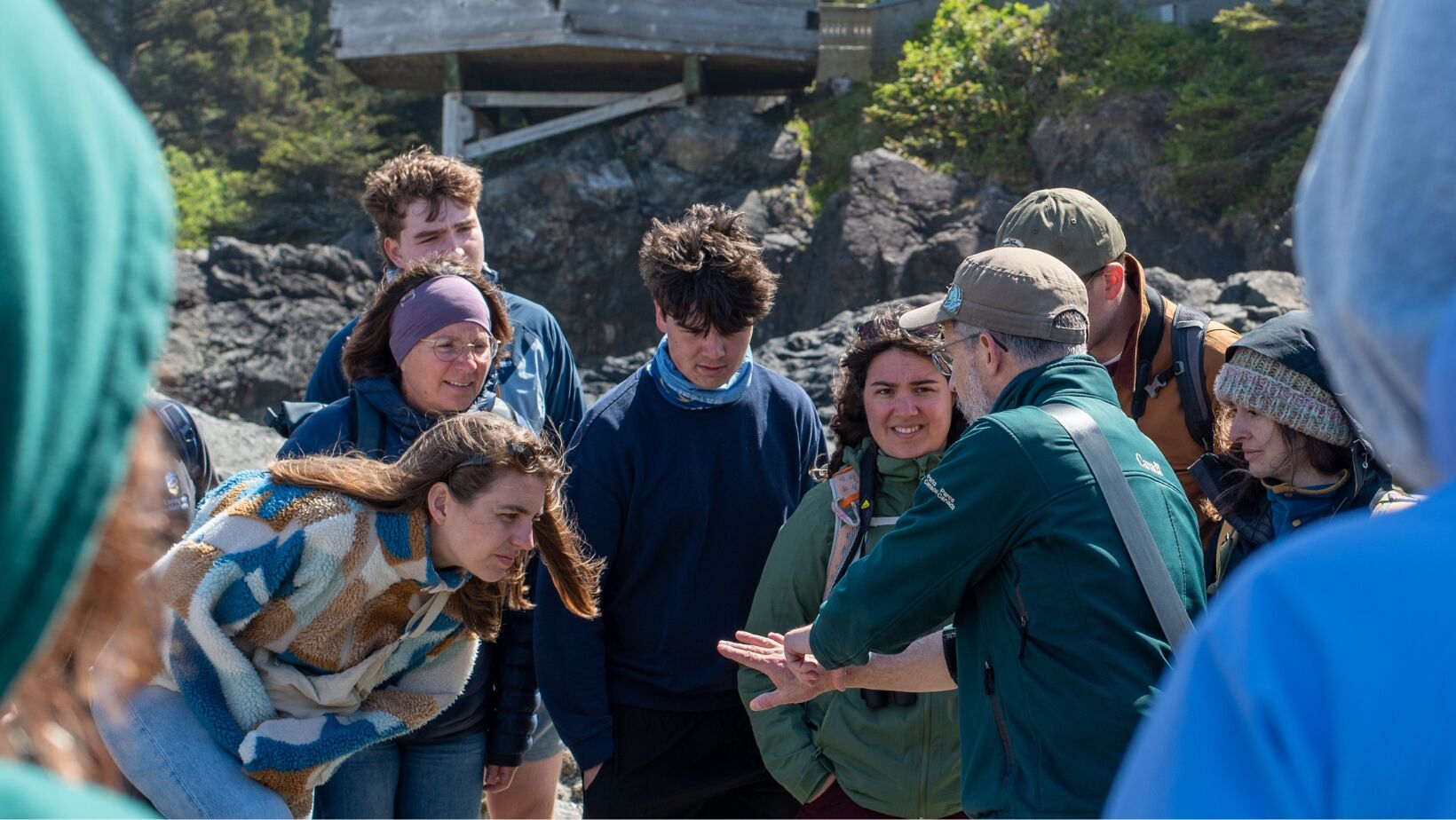
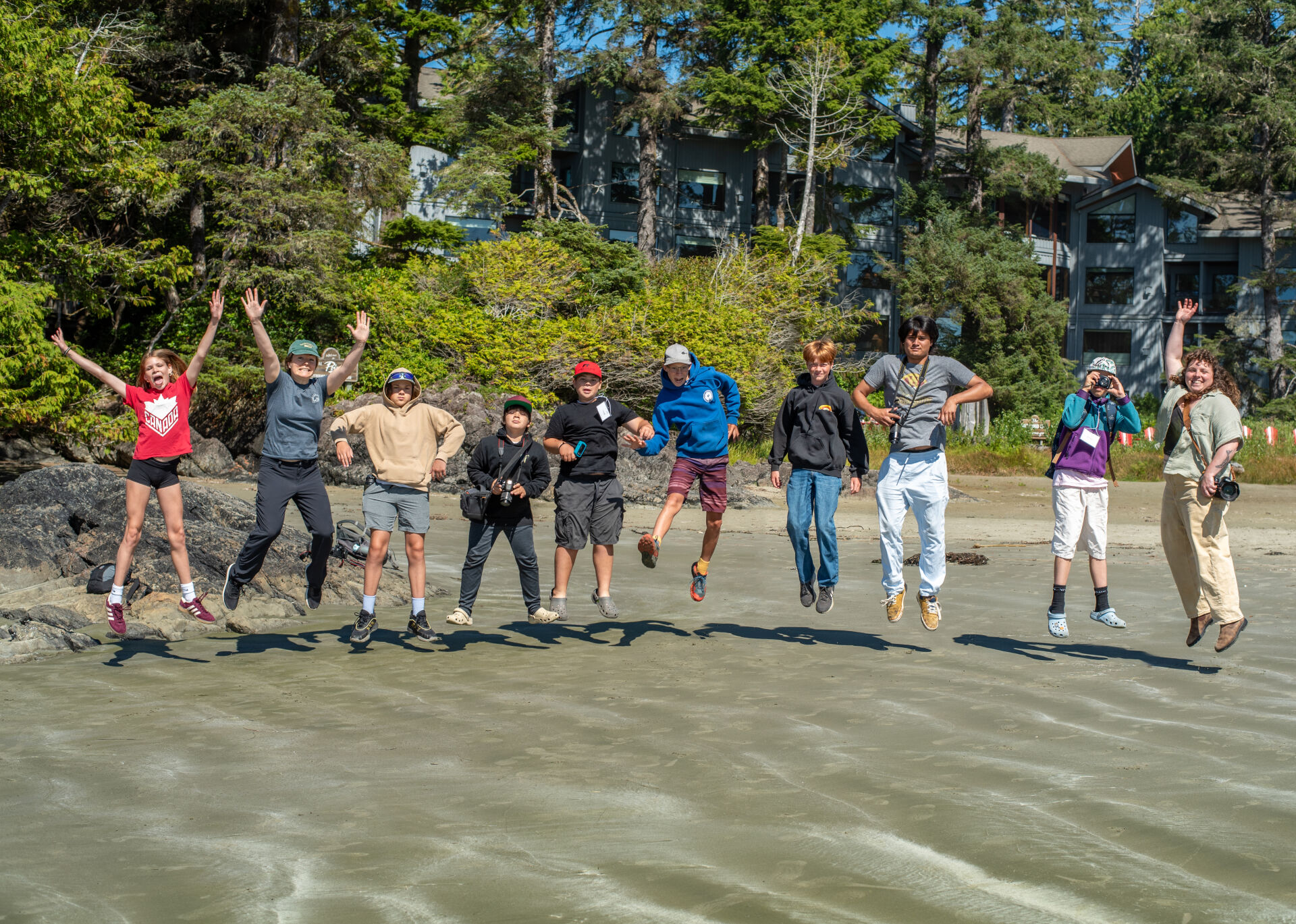
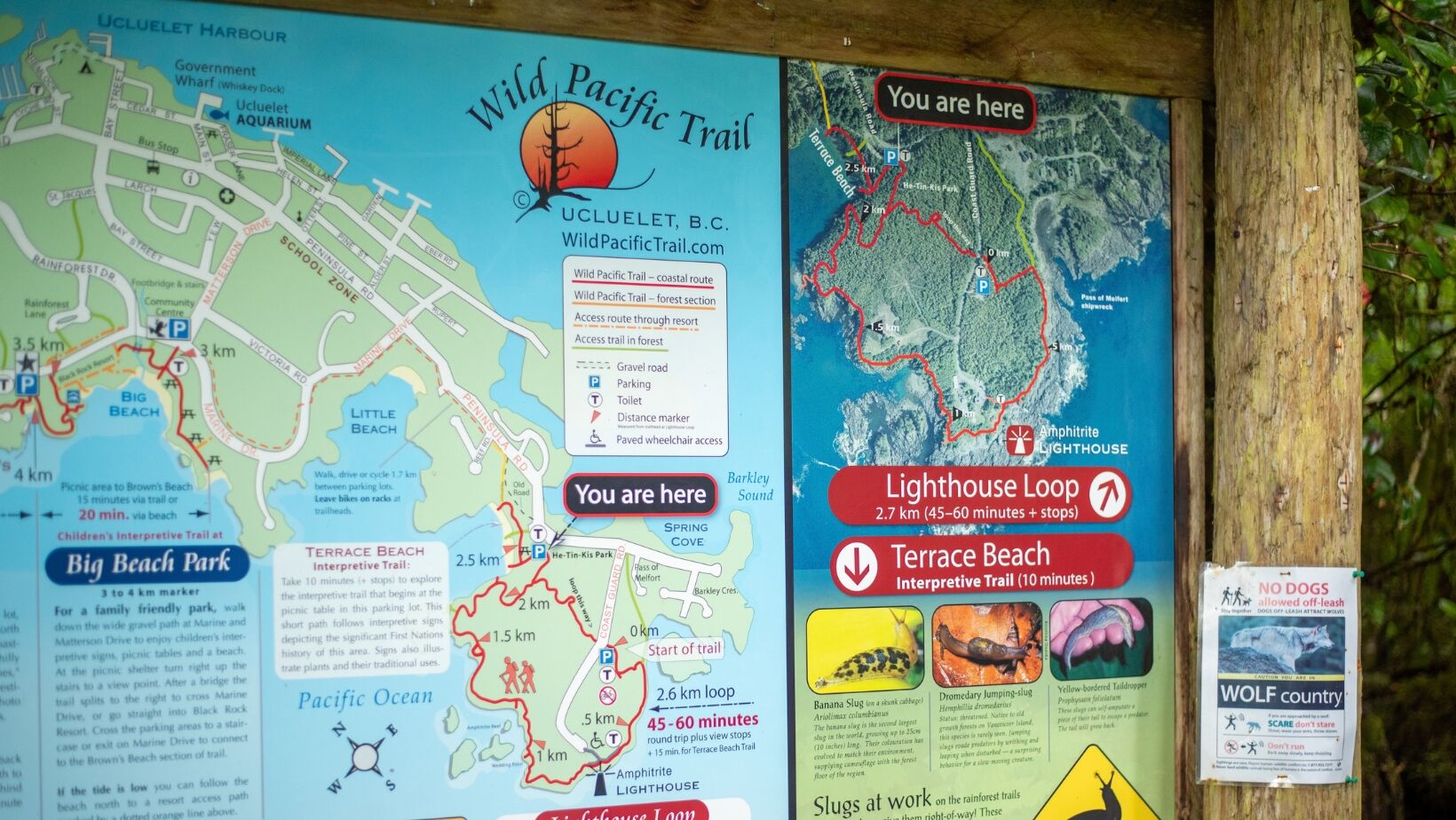 Photo credit: Nina Moodley
Spring Cove is a sheltered inlet along the Wild Pacific Trail behind Hyphocus Island. This land has been stewarded by the Yuułuʔiłʔatḥ (Ucluelet First Nation) for thousands of years, long before European settlement. The traditional name of Spring Cove is Hinapiis, meaning “behind it” or “behind the island”.
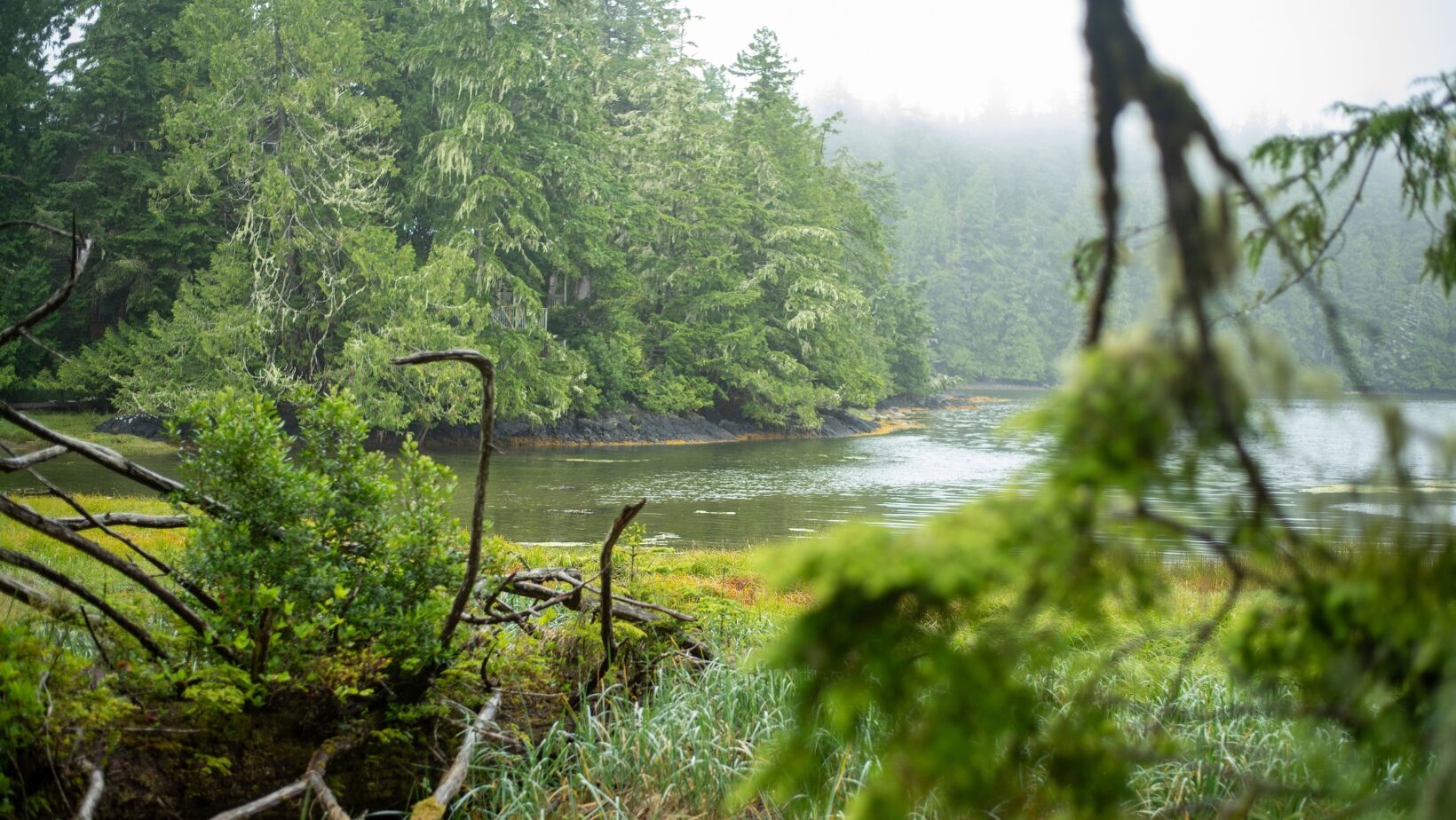 Photo credit: Nina Moodley
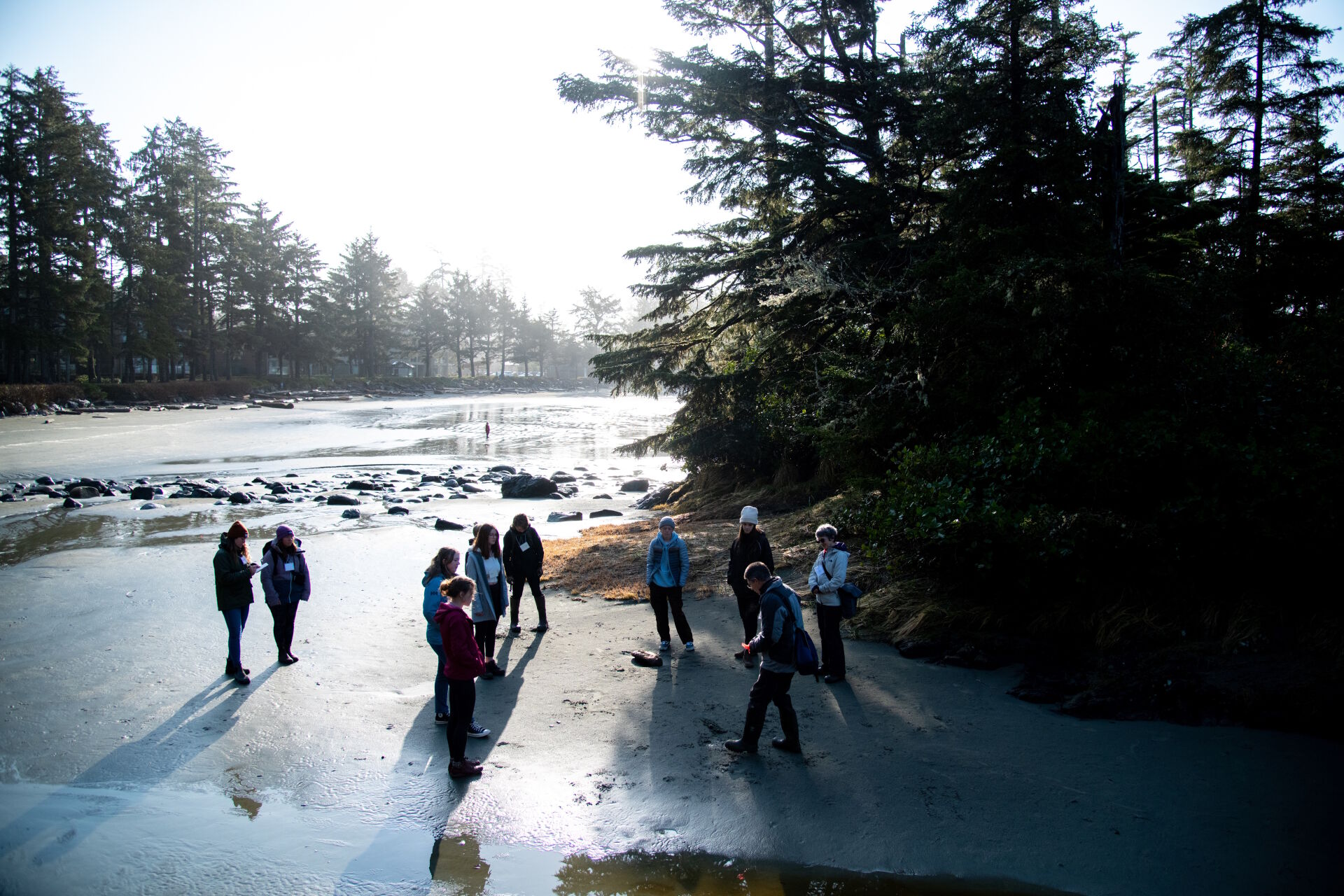
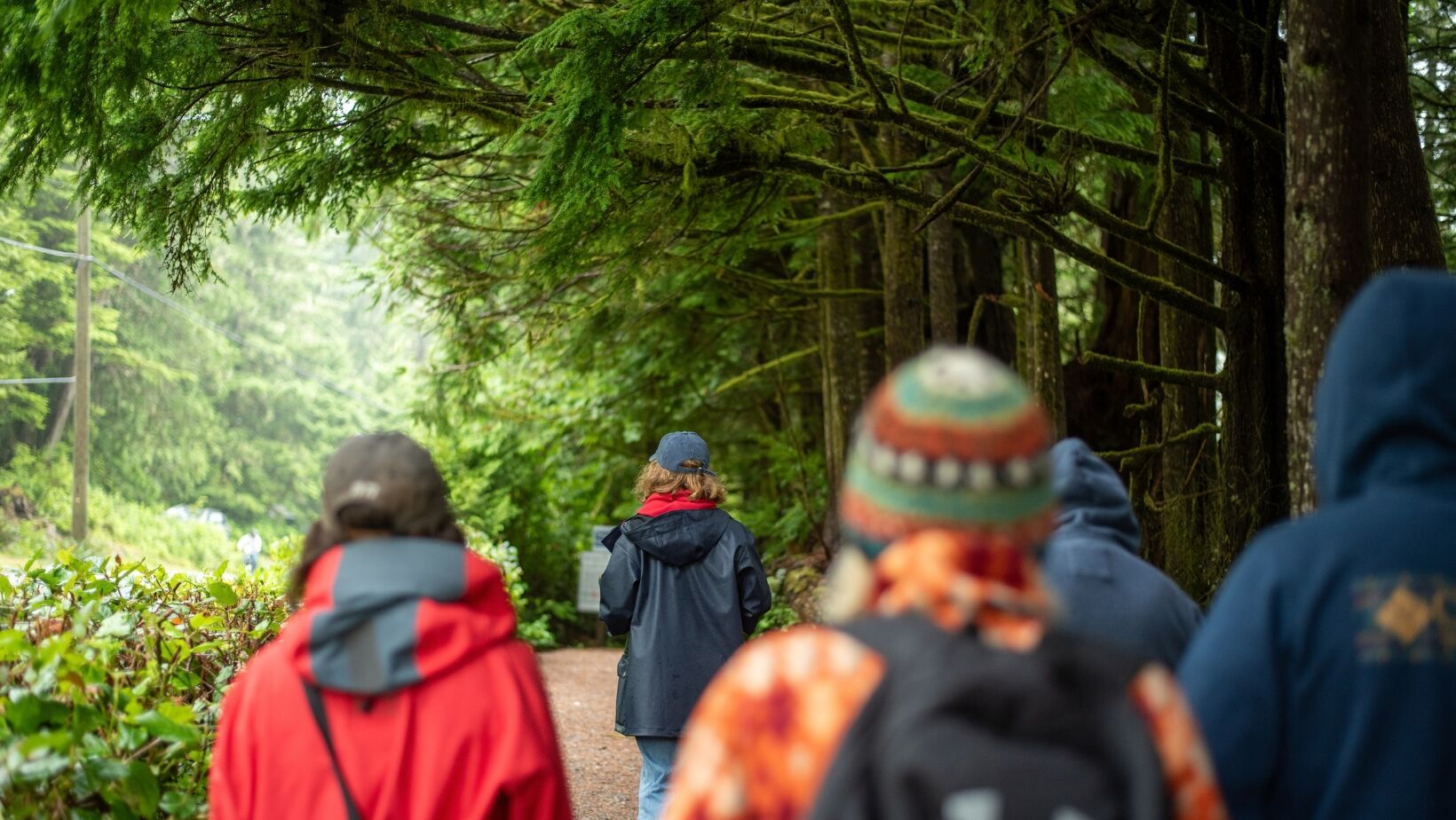
Over the course of the 1-2 hour walk, we had the opportunity to explore the forest, mudflats, eelgrass meadows and ancient portage routes while hearing stories about the area’s history, the life it sustains and how these interconnected landscapes have shaped Ucluelet into what it is today. To begin our journey Chloe introduced the background of how wetlands like these are created and the role they play in the balance of the ecosystem. She explained how in sheltered intertidal areas, tides gradually deposit fine sediment that create the broad, flat wetlands we call mudflats. Mudflats are abundant ecosystems supporting a rich diversity of life including birds, fish, plants and even people. 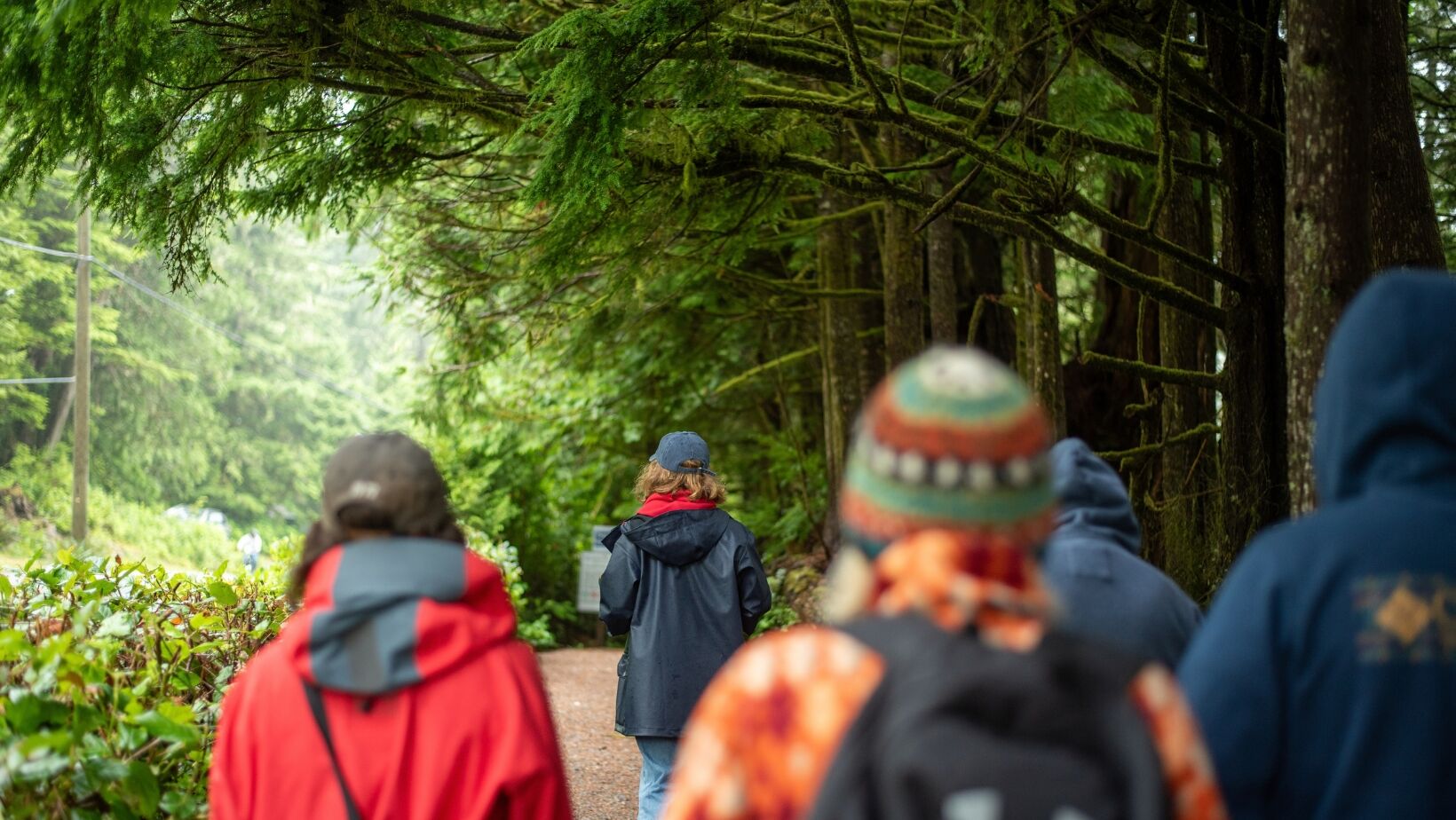 Photo credit: Nina Moodley
Chloe also shared how the landscape has changed over time. Once a deeper harbour, the cove transformed into a mudflat after a logging road was built to Hyphocus Island in the 1960s. The road restricted water flow, causing sediment to accumulate and reshape the landscape. What was once a busy fishing harbour gradually became one of the most productive wetland ecosystems on the coast. 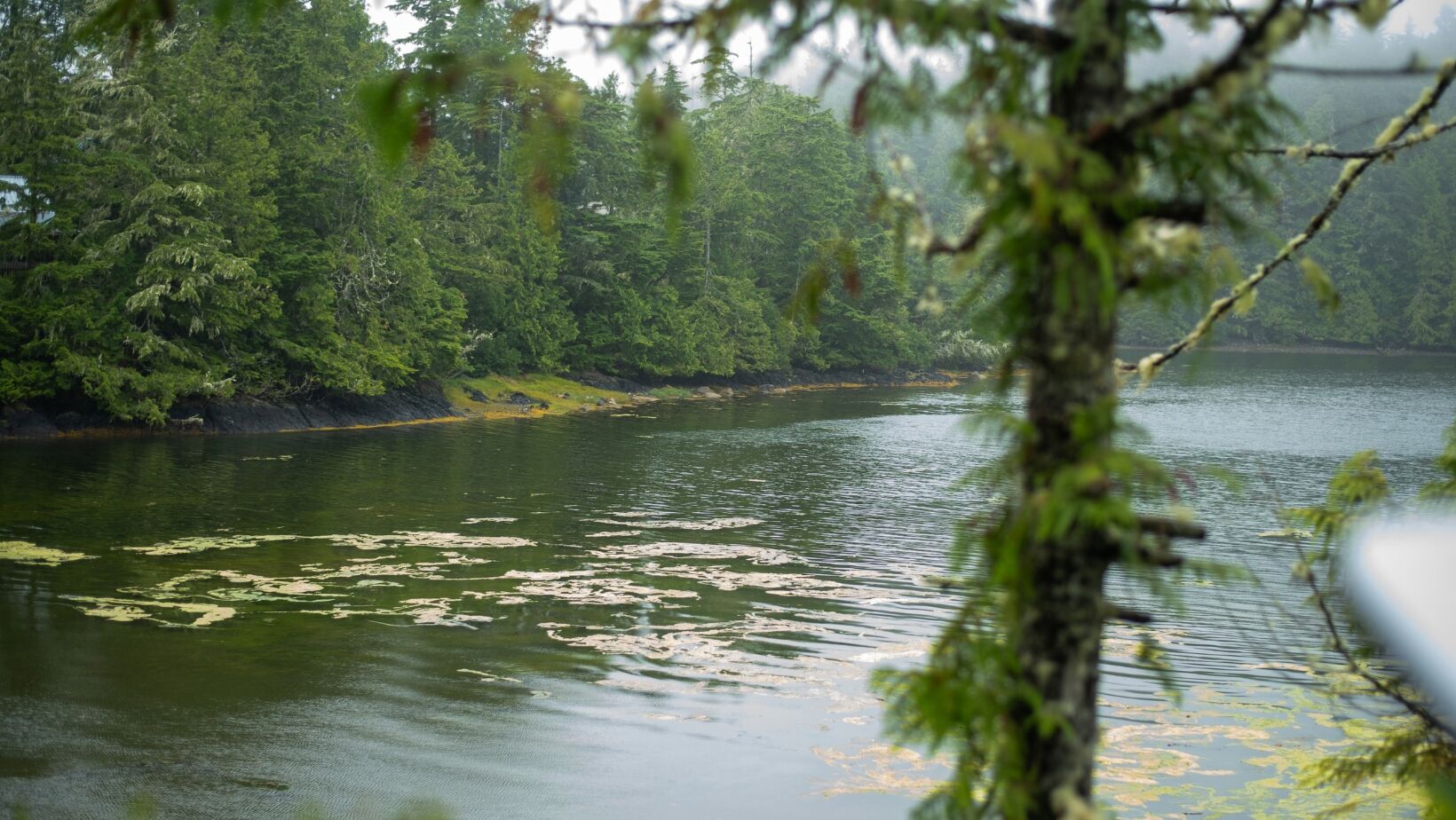 Photo credit: Nina Moodley
She also explained how wetlands like Spring Cove serve as essential refueling stations along the Pacific Flyway, a bird migration route spanning from South America to Alaska. With some birds flying over 10,000 km each year, mudflats like these serve as well needed rest stops to rebuild energy reserves. 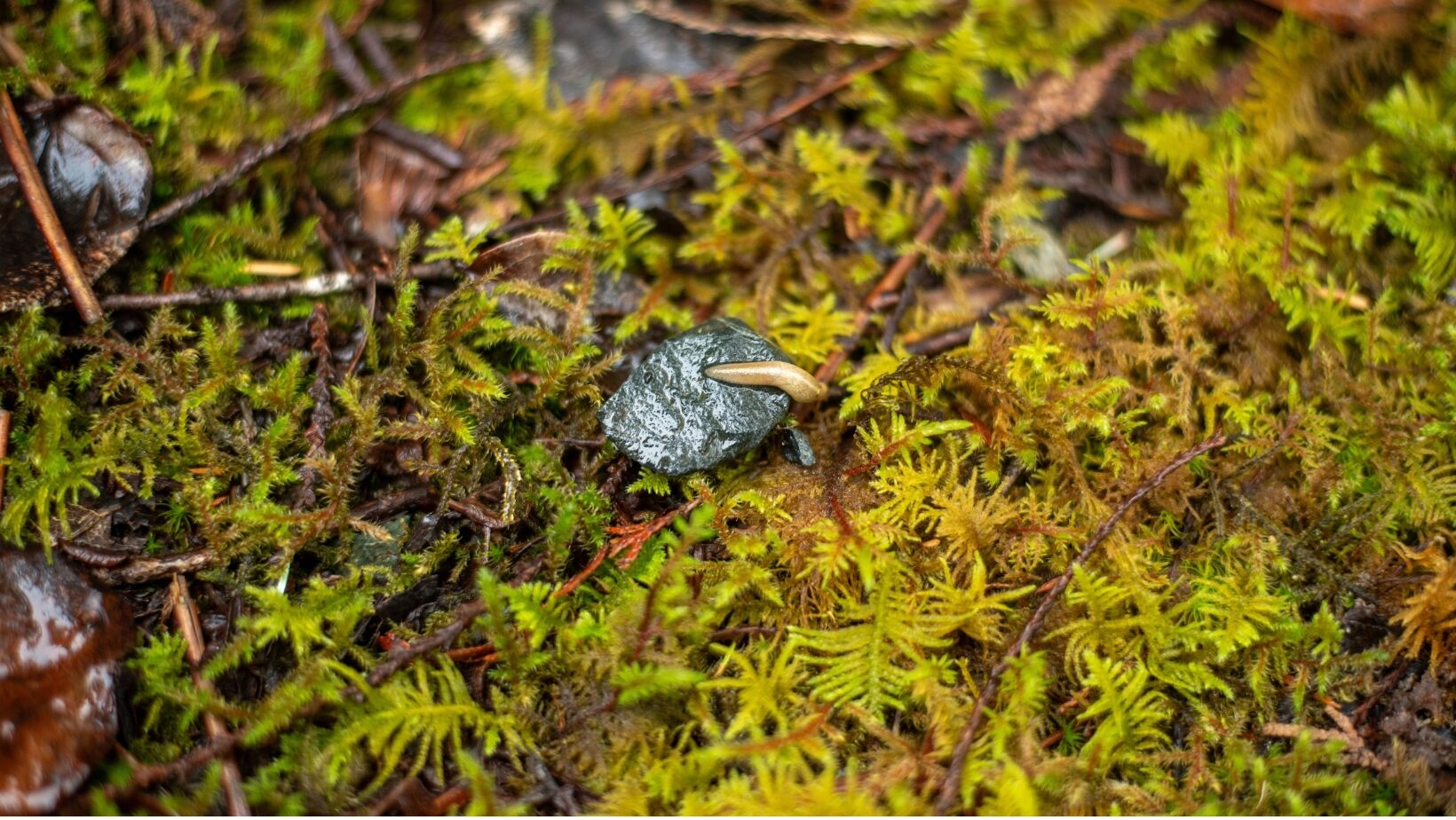 Photo credit: Nina Moodley
Along with the mudflats in Tofino which are protected as a Wildlife Management Area, these mudflats are identified as part of an Important Bird Area by BirdLife International. We stopped for a brief moment to give everyone a chance to spot some birds with binoculars as it’s common to see sandpipers, herons, and gulls scouring the mud for invertebrates.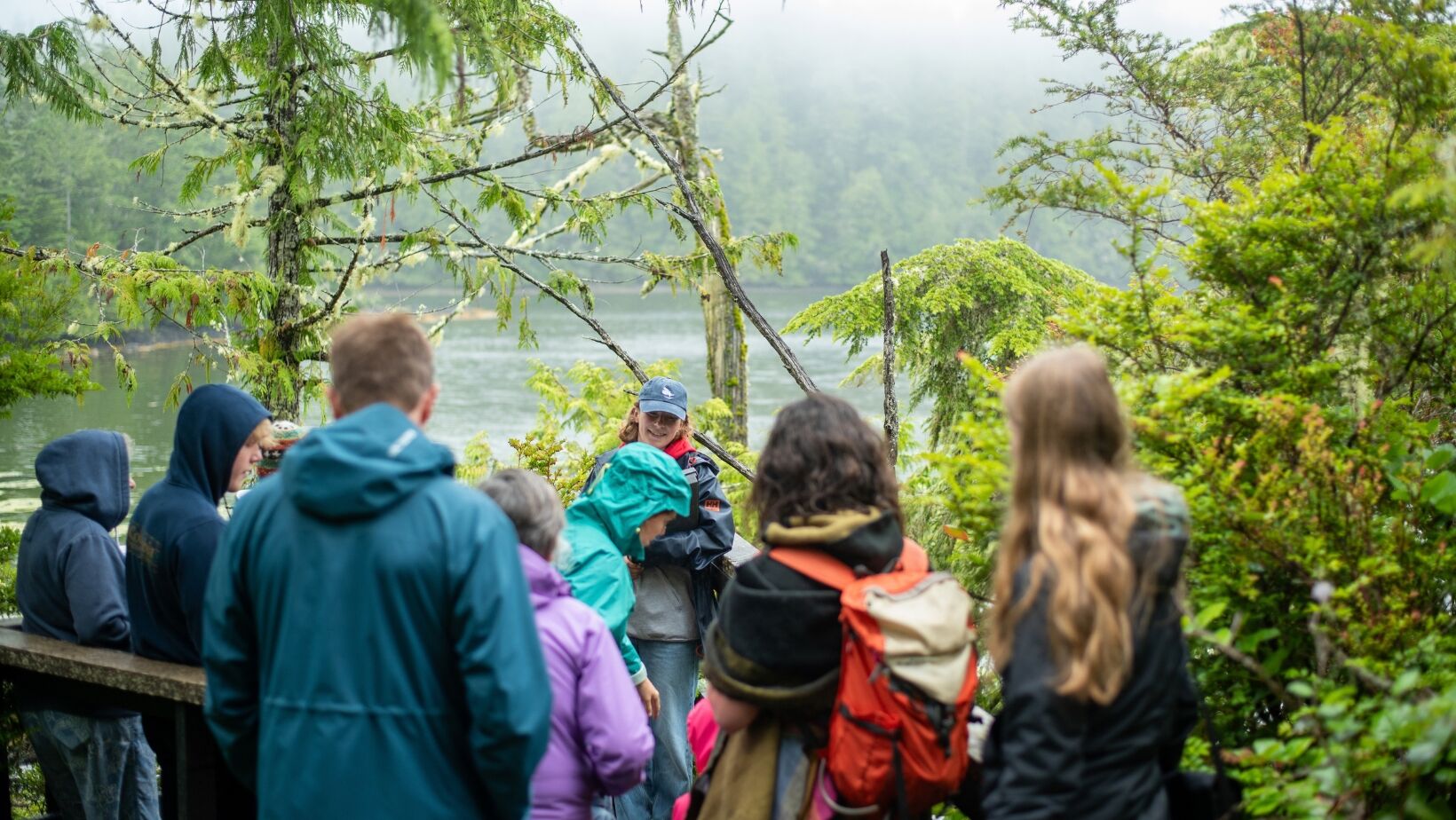 Photo credit: Nina Moodley
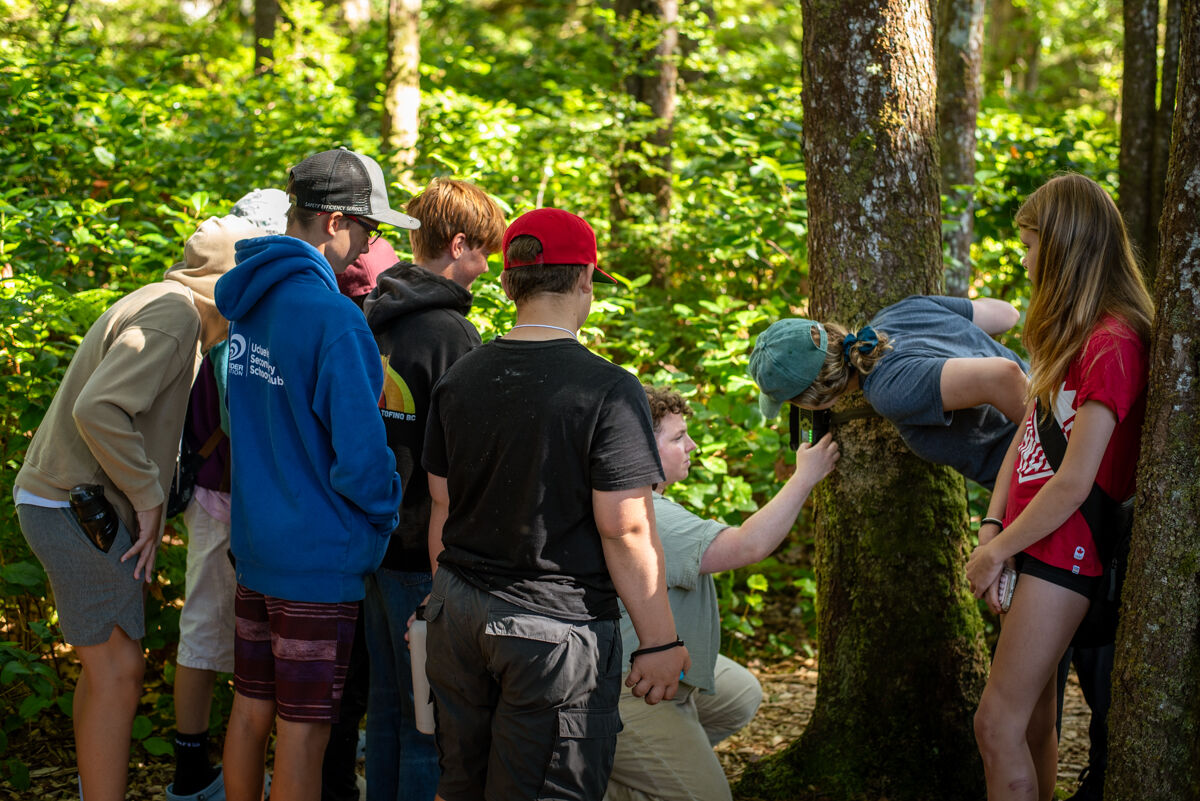
Further along the trail the group stopped to discuss the Elder Tree, an ancient Western Red Cedar growing on fallen generations of trees. For the Yuułuʔiłʔatḥ, this tree symbolizes how Elders support youth and help them grow. Dedicated to the late Barb Touchie, a respected Elder and language keeper, the site honours intergenerational knowledge and the partnerships that make cultural learning possible. 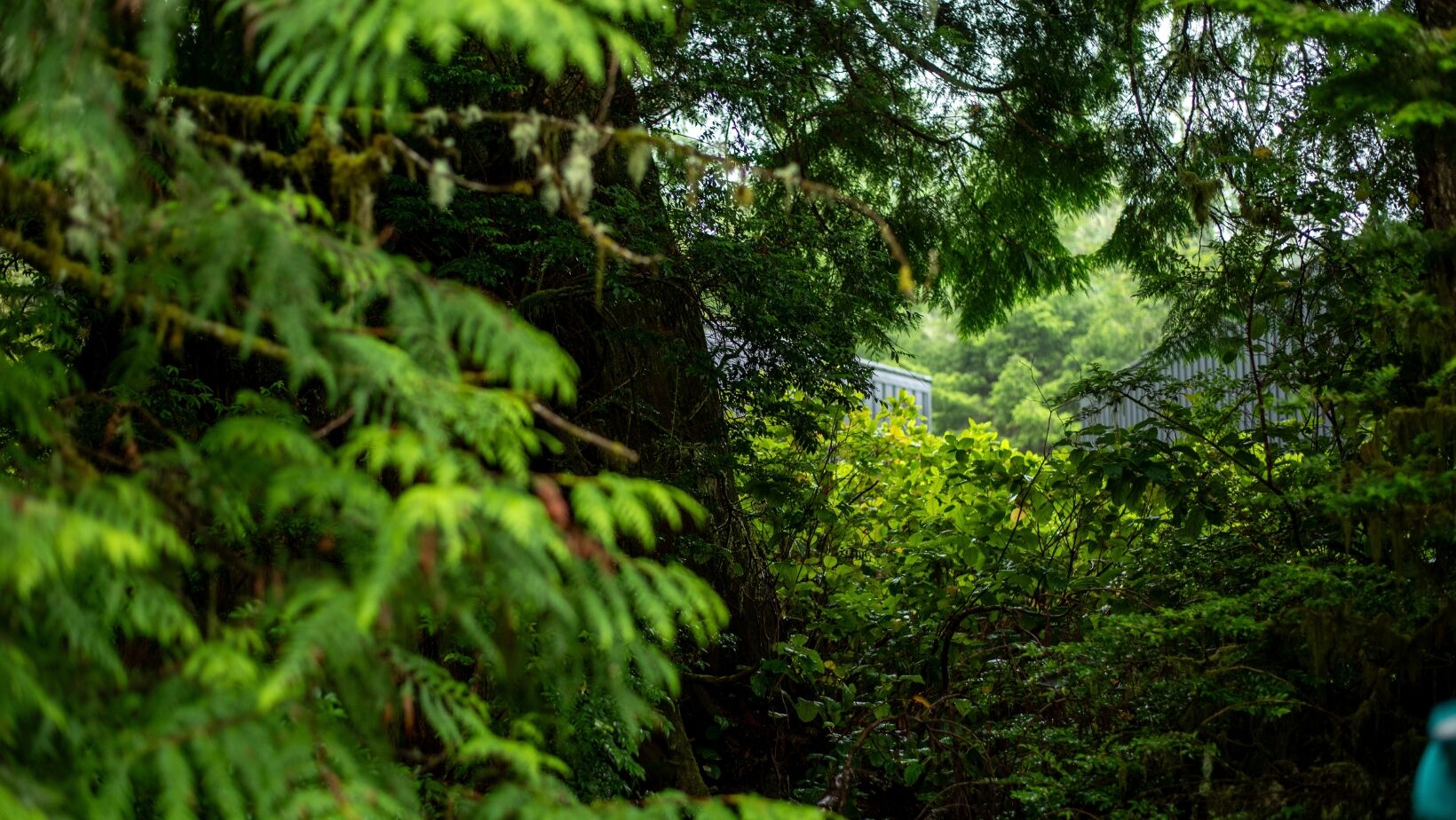 Photo credit: Nina Moodley
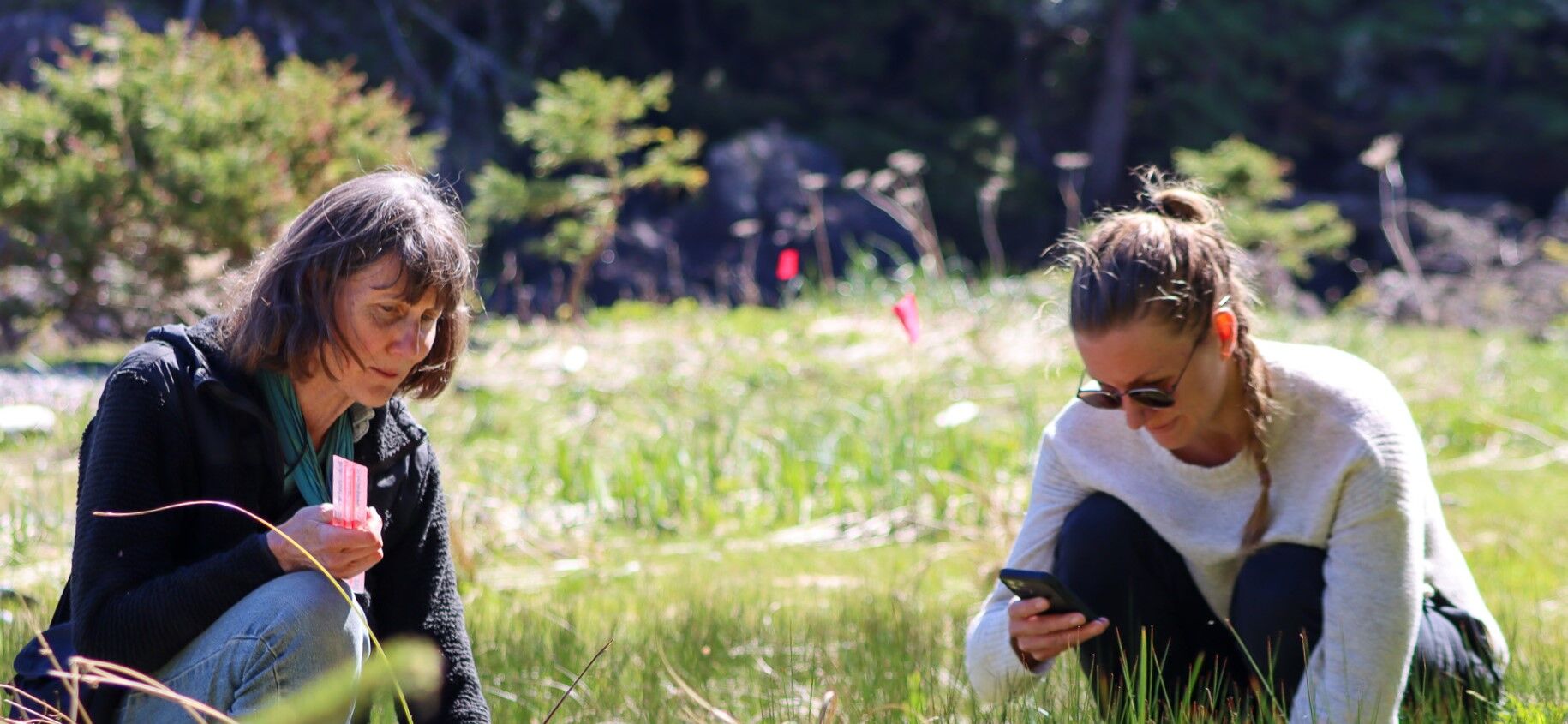
At our next stop, Chloe shared some images of the Eelgrass meadows located way out by the low tide line in the transition zone. Eelgrass is an important plant species in the region and plays multiple roles in the overall health of our ecosystems.
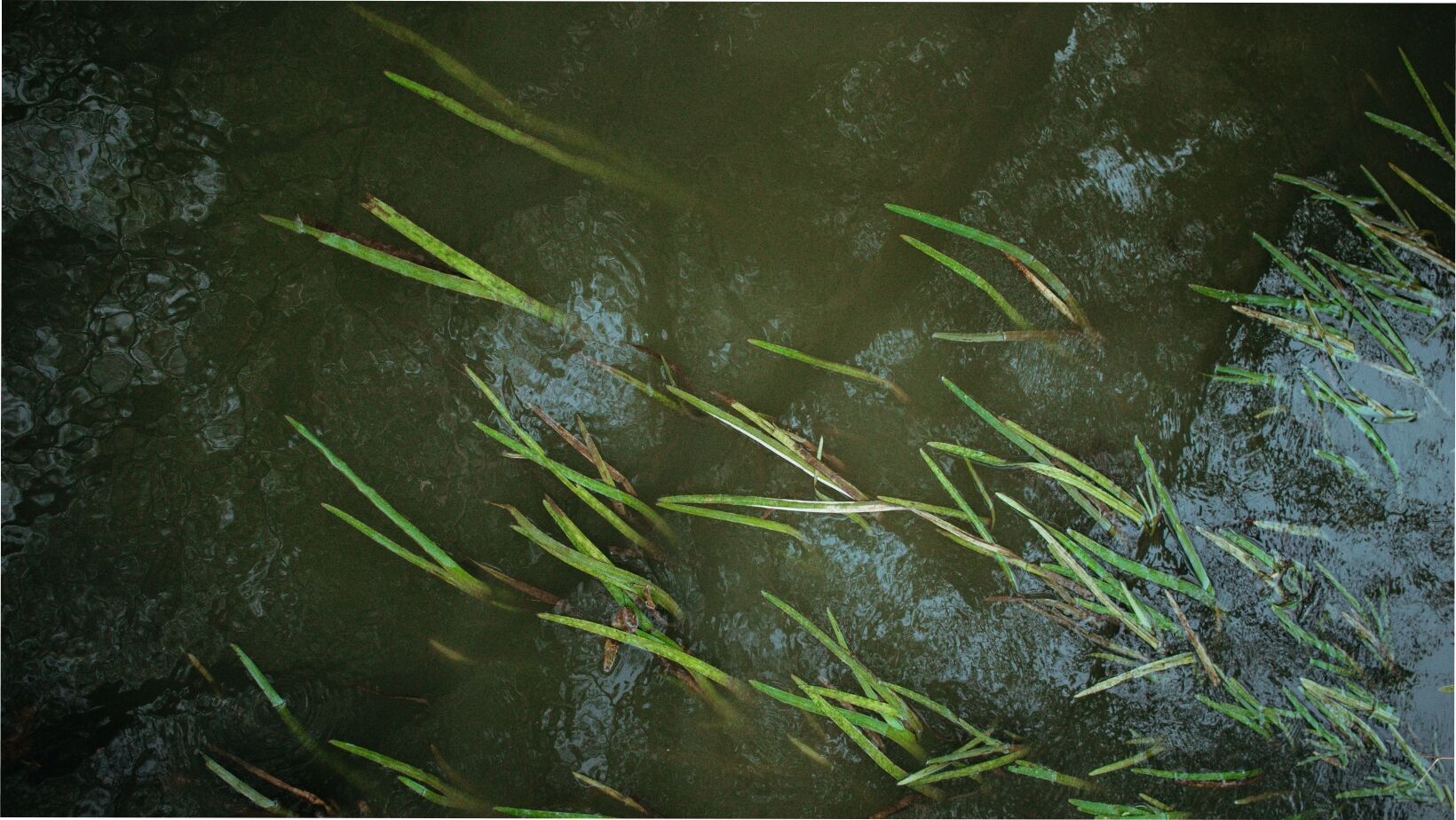
This includes being a very powerful carbon sink, absorbing carbon dioxide and storing it in the sediment helping to regulate climate. Eelgrass also acts as a fantastic biological health indicator and can show us when the health of the whole ecosystem is thriving or under stress. It even helps to shape the land by acting as a barrier breaking strong tide currents, stabilizing sediments and preventing further erosion of our shorelines.
Eelgrass beds are essential nursery habitat for tons of species, providing food, protection and shelter. Fish like salmon, pipefish and seahorses as well as invertebrates like crabs, shrimp, snails and over 100 species of microalgae all rely on these meadows. 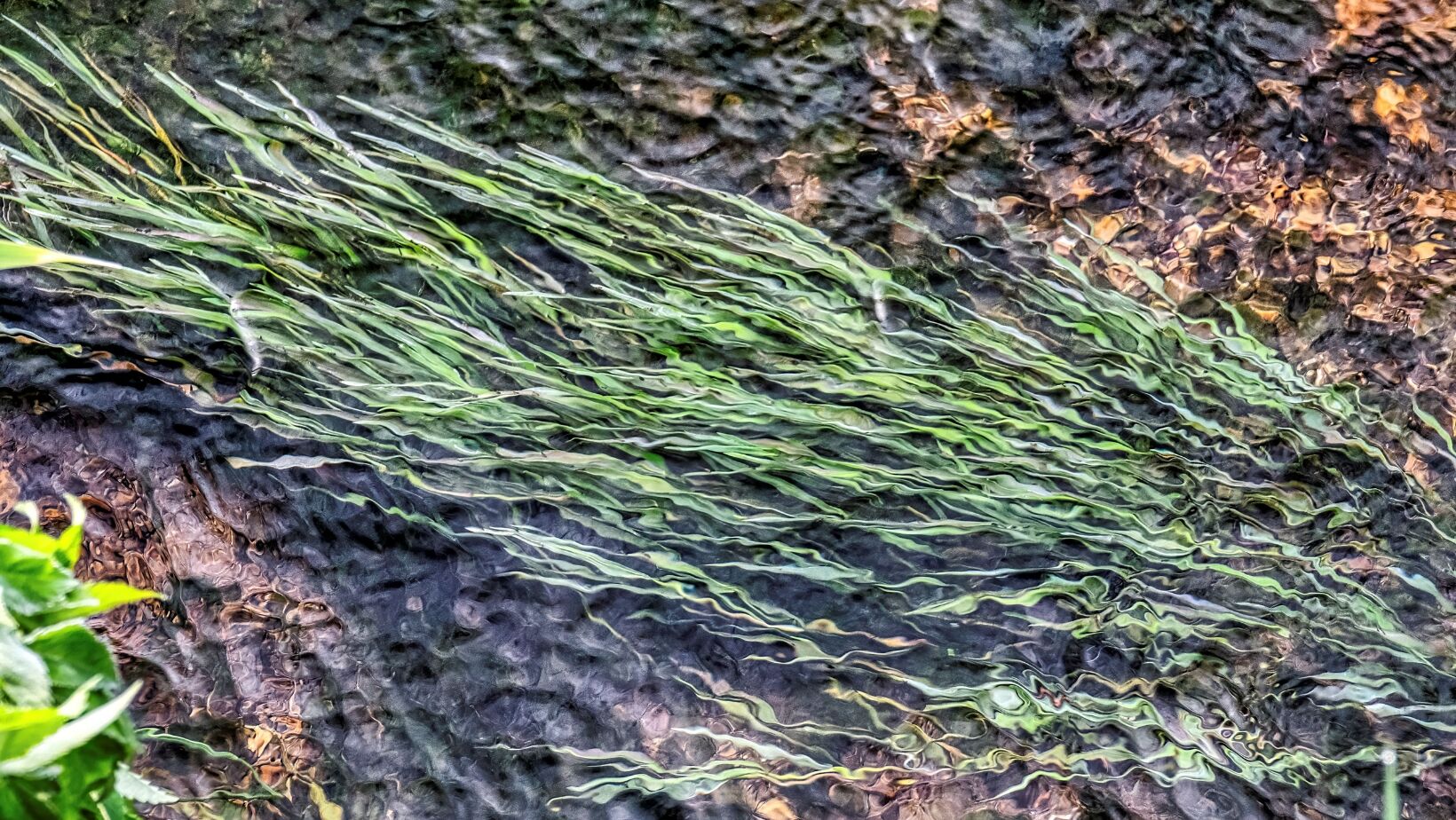
Current threats to eelgrass include runoff from land such as sewage and fertilizers that can fuel excessive algae and phytoplankton growth. These blooms block sunlight from being able to reach the eelgrass, limiting its ability to photosynthesize and grow.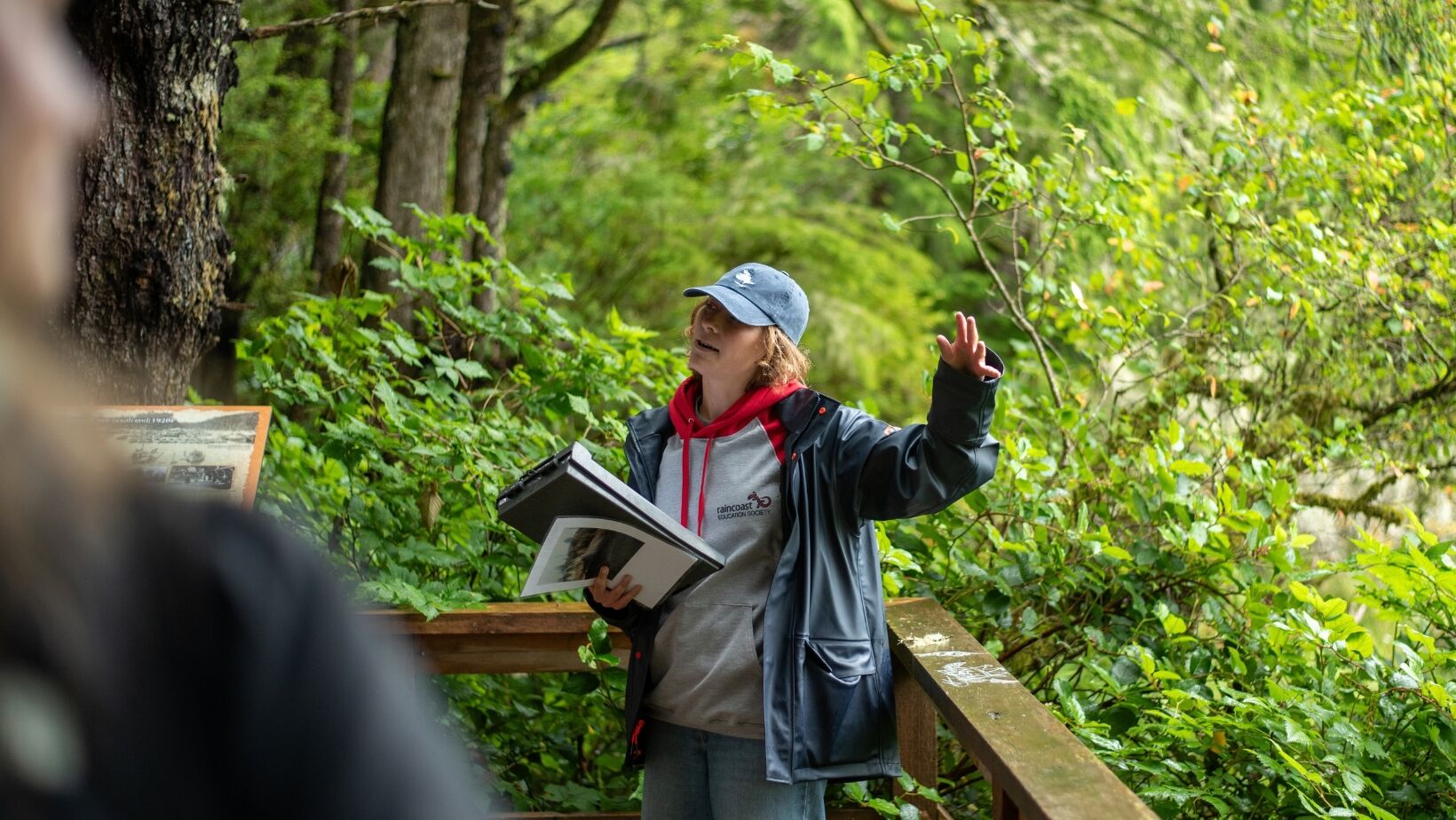 Photo Credit: Nina Moodley
As we made our way closer to Terrace Beach, Chloe provided some historical background on the Spring Cove area. She shared that long before roads connected the coastline, the land between Terrace Beach and Spring Cove served as an important portage route for several Nuu-chah-nulth First Nations who occupied and stewarded Ucluelet Harbour until the 1770’s before European settlers arrived. For generations, canoes, supplies, and harvested foods were carried across this short stretch of land, creating a vital link between sheltered waterways and the open coast.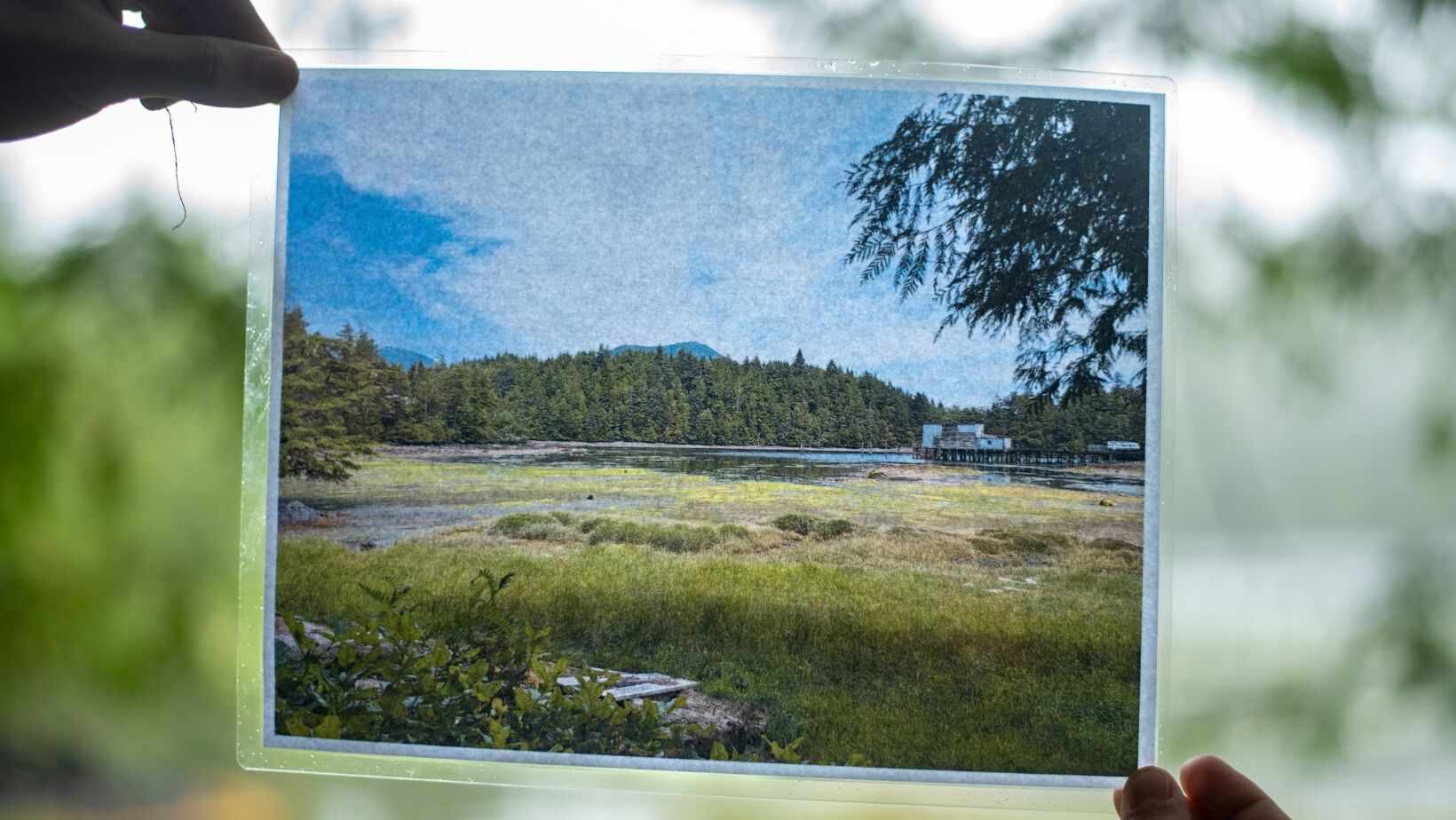 Photo Credit: Nina Moodley
Travelers used cedar dugout canoes loaded with fishing and hunting tools, including harpoons, sealskin floats, cedar rope, and mussel-shell knives. Shellfish gathered along the shore were collected in specially designed root baskets that allowed water and sand to drain away, while fish and other foods were cleaned, dried, and smoked. From Hinapiis, smaller canoes could then paddle across the inlet to Hitacu, Ucluelet’s First Nation’s main village making this route an efficient and well-used shortcut for centuries.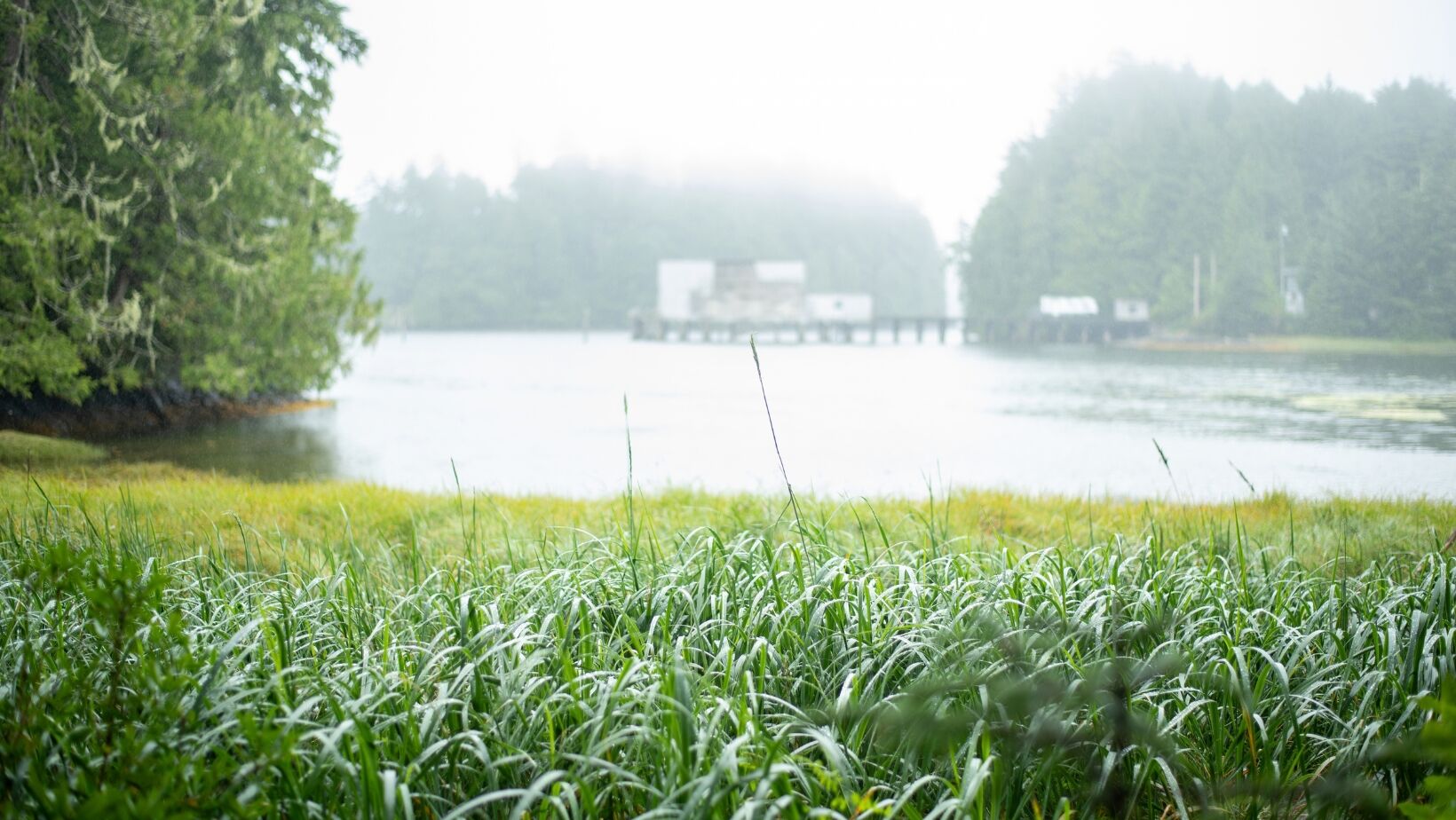 Photo Credit: Nina Moodley
As the sea otter fur trade grew in the early 1800s, more European ships began arriving on the coast. During this period, the Yuułuʔiłʔatḥ were relocated to the Hitacu reserve and lost access to their traditional harvesting areas. By the early 1900s, Japanese fishermen and their families had also settled in the area, and Spring Cove had grown into a busy fishing community.
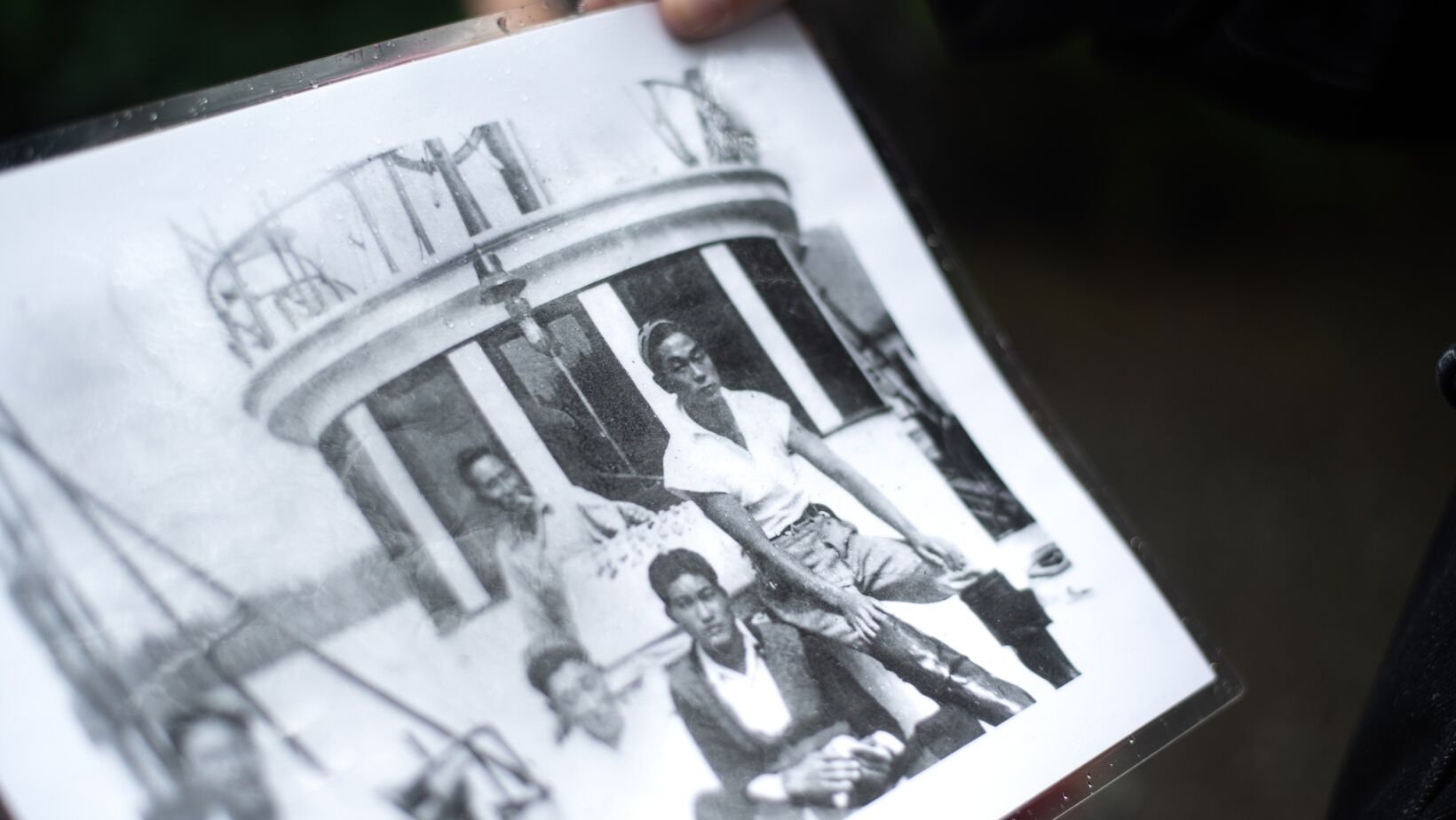 Photo Credit: Nina Moodley
European settlers, Japanese Canadian families, and Yuułuʔiłʔatḥ members all played important roles in the harbour's economy and culture. Despite separate social and educational systems, strong friendships formed, and people shared culture, traditions, and support with one another. While European and Japanese children attended local schools, many First Nations children were forcibly sent to residential schools.
The Second World War disrupted these close-knit communities. Following the attack on Pearl Harbor in 1941, Japanese Canadians were forcibly removed from the coast and sent to internment camps, losing their homes, boats, businesses, and livelihoods.
Although some families eventually returned and helped rebuild the local fishing industry, the community was forever changed. Their stories are an important part of Ucluelet's history and a reminder of the resilience of those who faced displacement and discrimination.
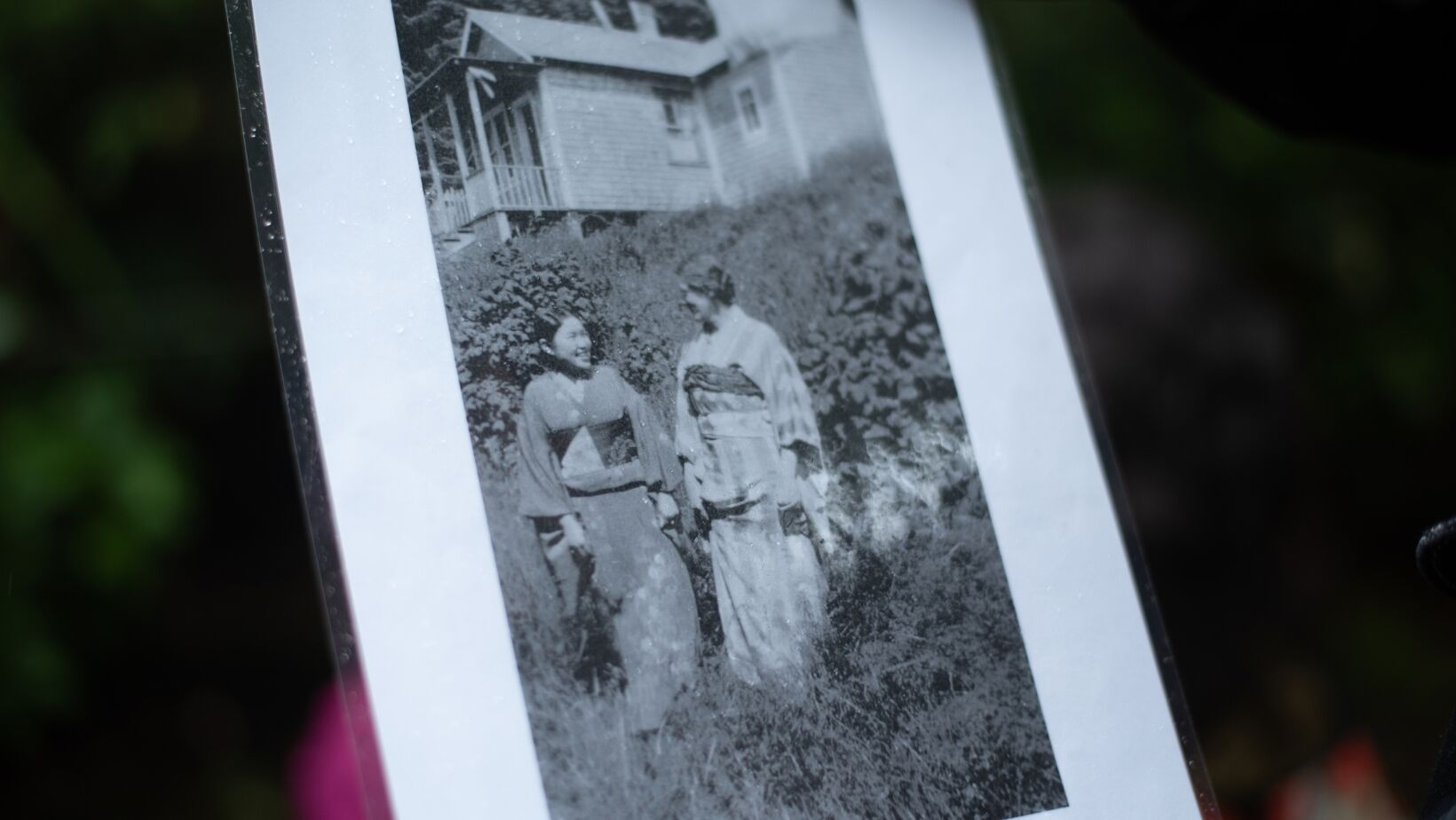 Photo Credit: Nina Moodley
As we keep making our way to Terrace Beach, Chloe switches gears to show us more about the life that calls this ecosystem home.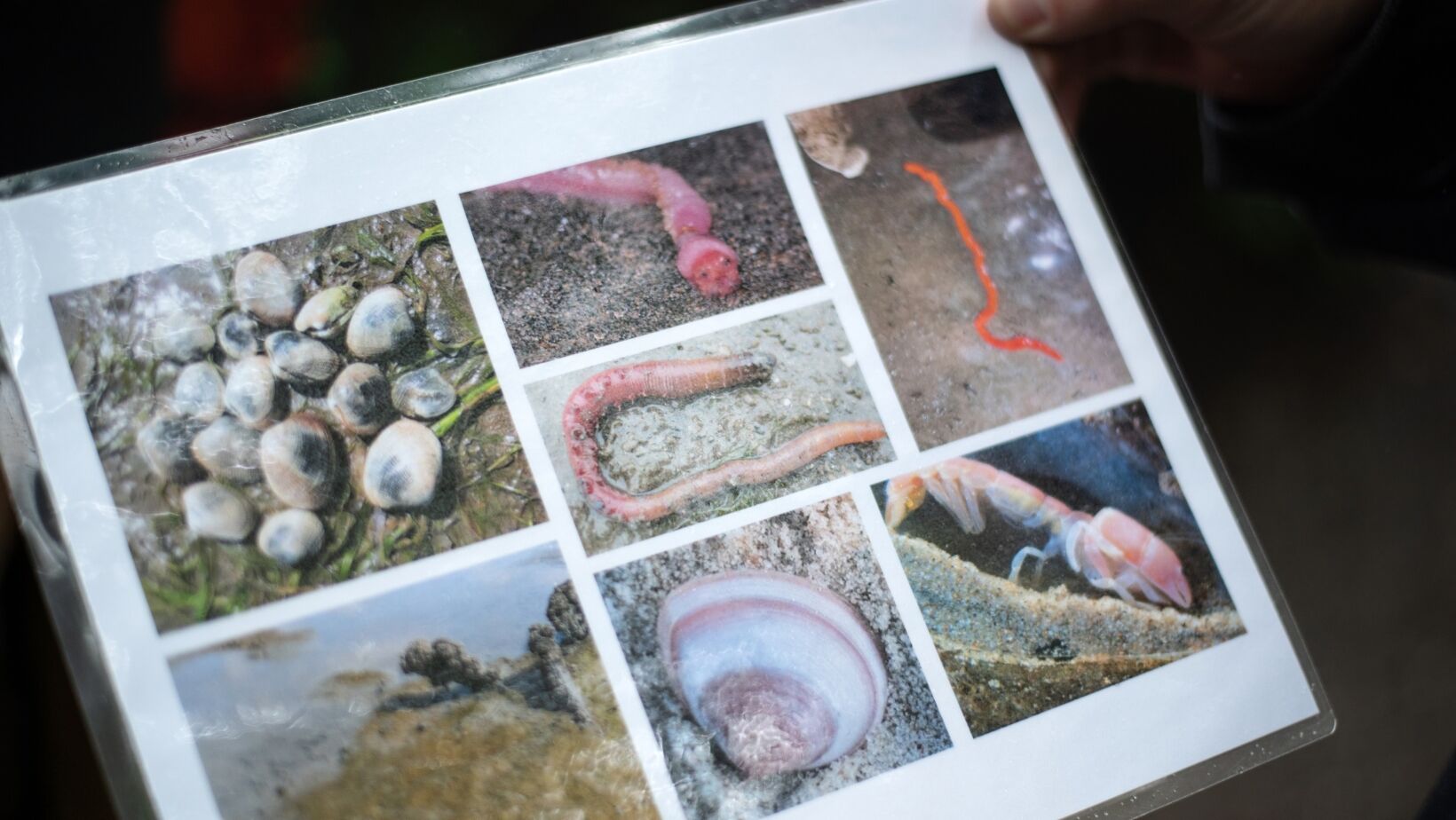 Photo Credit: Nina Moodley
Participants got to have a look at some of the elusive creatures that live in the mud including bloodworms, lugworms, ghost shrimp, clams, ribbon worms, and more. Together these organisms help to recycle nutrients, support birds and fish and aerate the sediment.
Covering the surface of the mud is a thin layer of biofilm, made up of microscopic algae, bacteria, and other microorganisms. It’s a nutrient-rich coating packed with fats and energy, and an important food source for many species that depend on these wetlands. 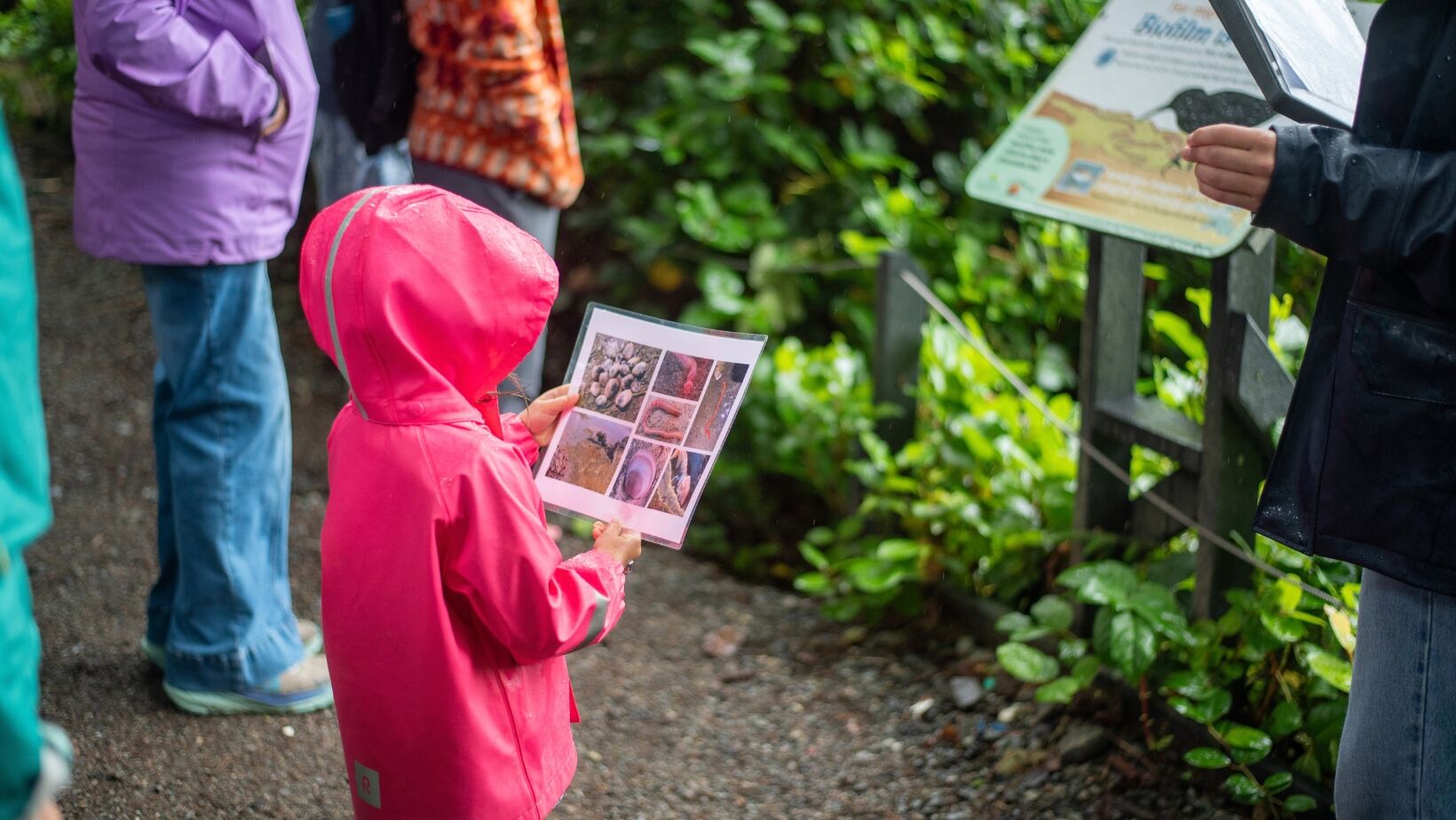 Photo Credit: Nina Moodley
Birds such as Western Sandpipers stop at mudflats during their long journeys along the Pacific Flyway, scraping biofilm from the mud. This tiny layer can provide a significant portion of the energy they need to complete their migration.
With so much life depending on the mudflats, small disturbances can have lasting impacts. Every footprint compresses the sediment, damages delicate biofilm layers, and disrupts the habitats beneath the surface. Consistent stress such as trampling can reduce food availability for birds, damage eelgrass roots, and decrease the overall biodiversity of the ecosystem.
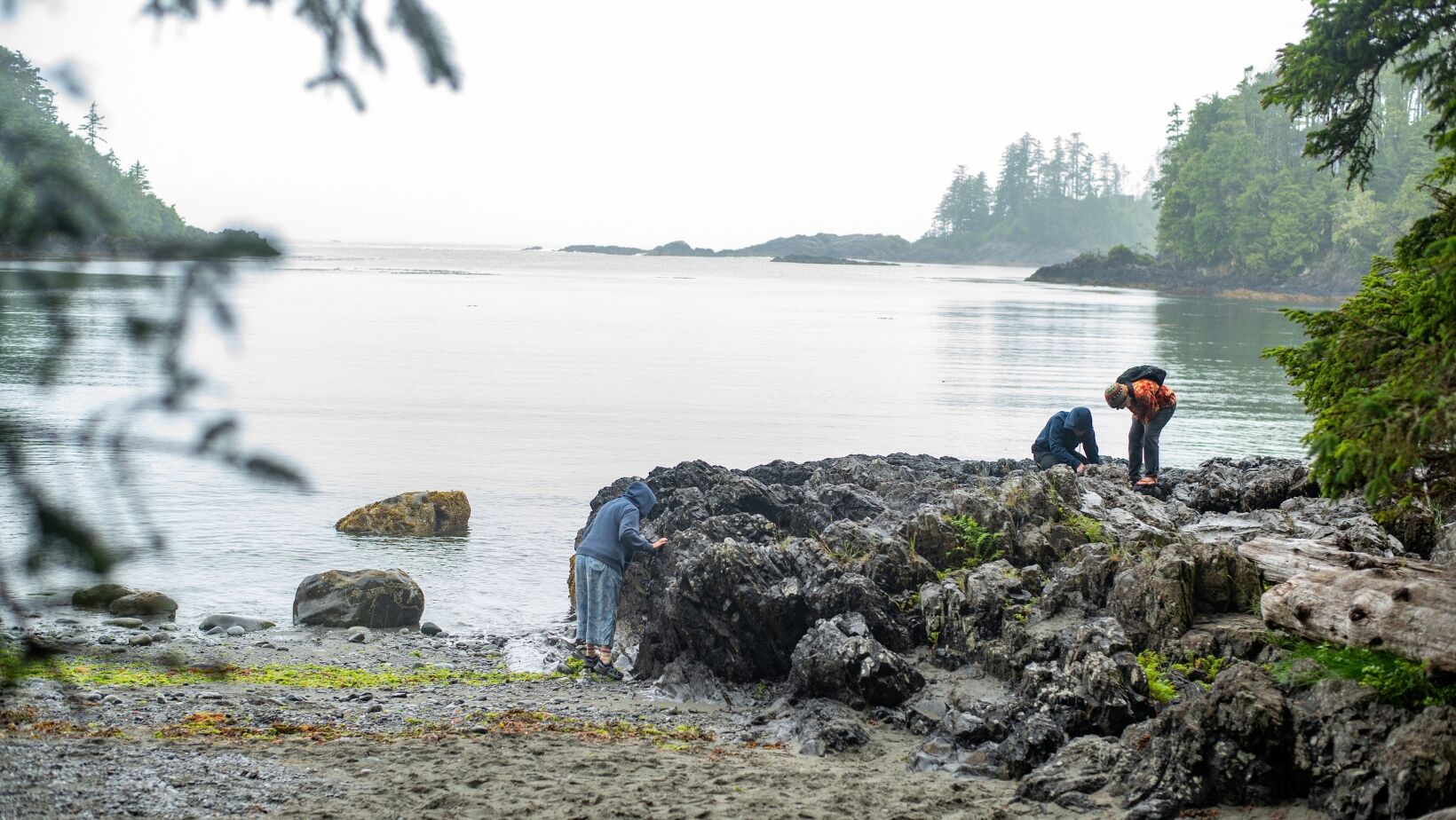 Photo Credit: Nina Moodley
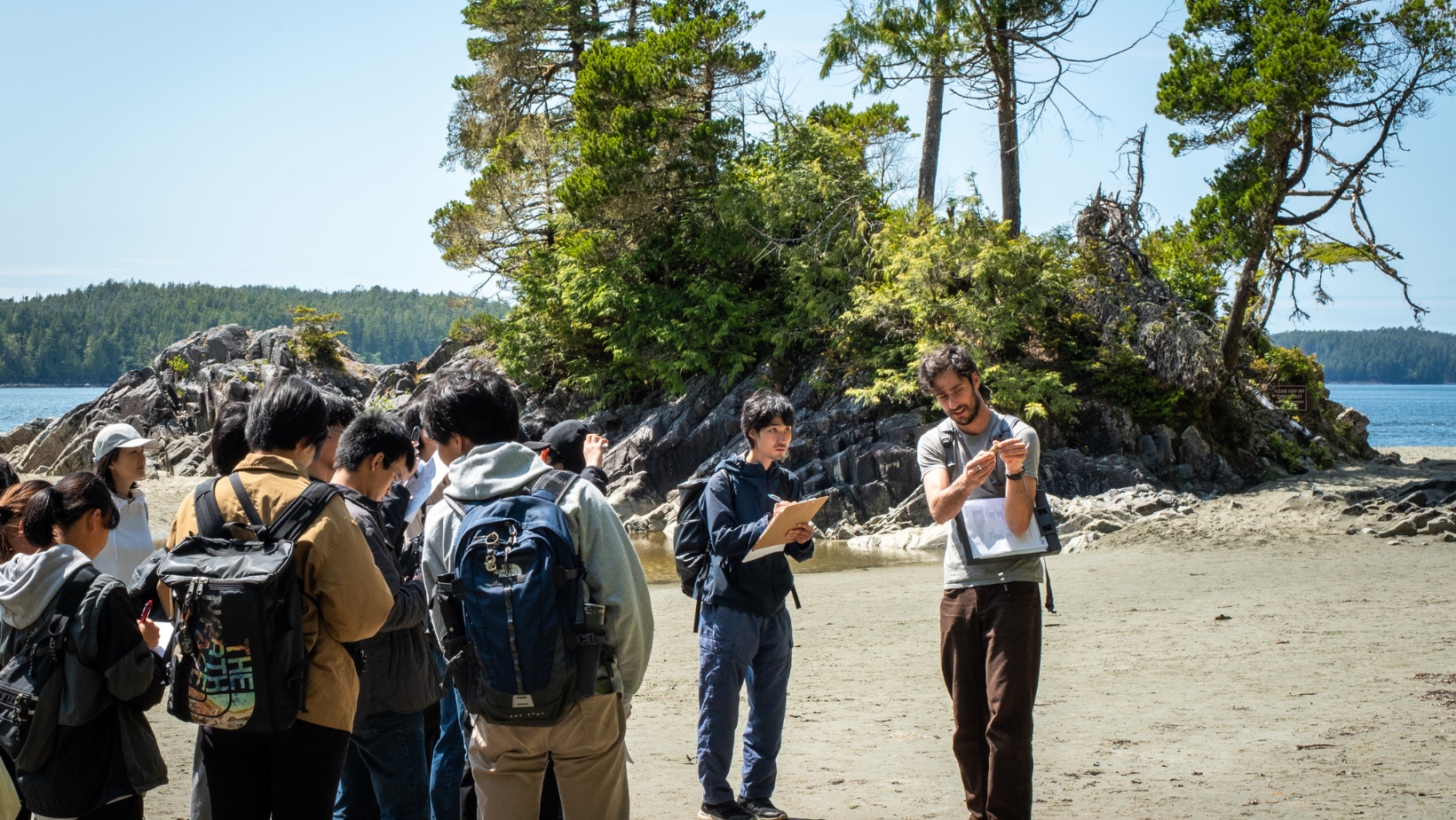
Arriving at Terrace beach, we saw a much different coastline. Exposed to the open ocean, strong waves continually wash away fine sediments, leaving behind sand, gravel, and rocks. While the landscape here is dramatically different from the sheltered mudflats of Spring Cove, the two ecosystems share one important feature: eelgrass meadows. 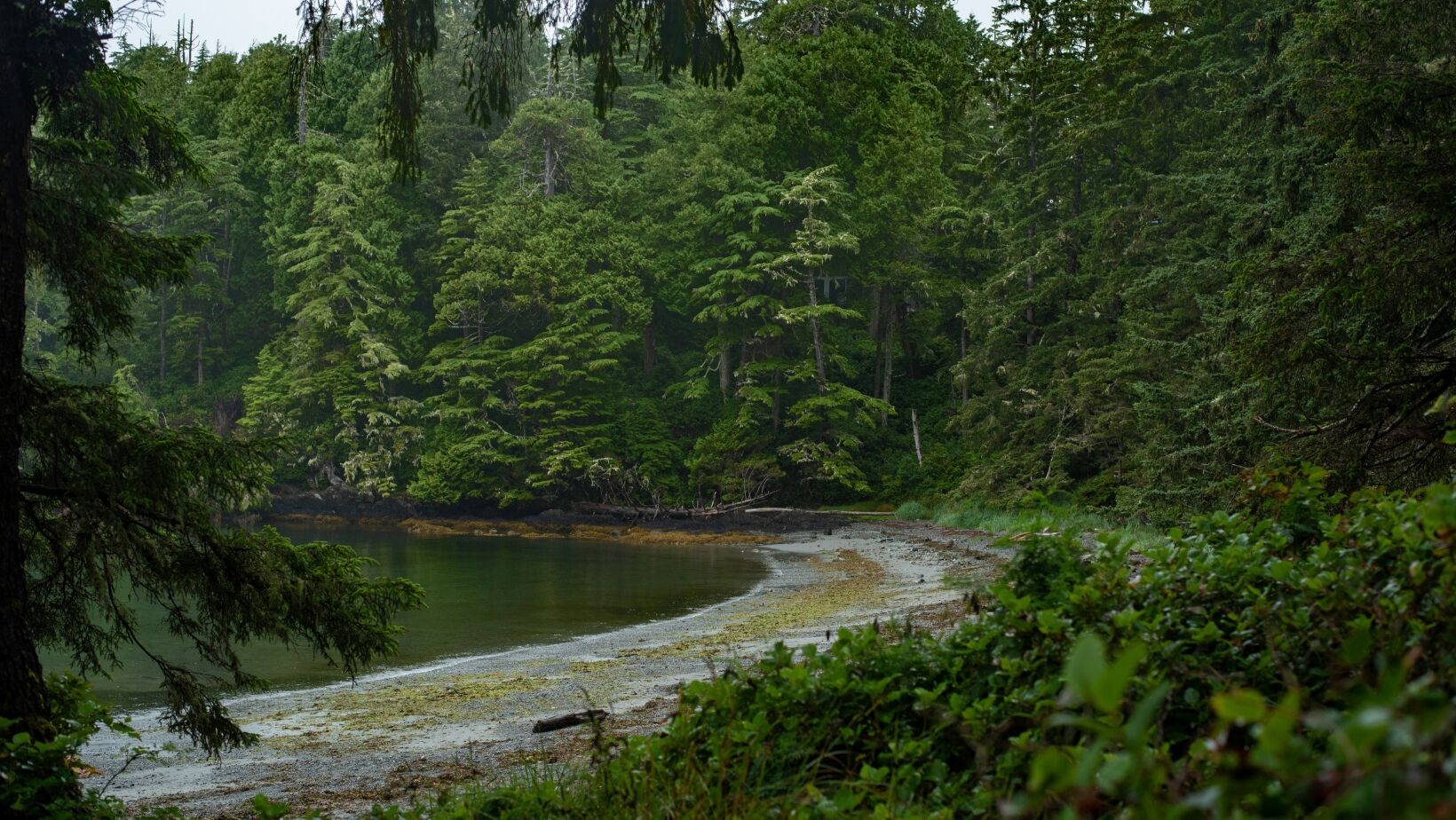 Photo Credit: Nina Moodley
The Spring Cove Mudflats Interpretive Walk is an invitation to slow down, look closely, and appreciate the resilience of coastal wetlands, the communities that have depended on them for generations and the history that has shaped what it has become today. Raincoast Education Society and the Wild Pacific Trail will resume this walk for summer 2027 for anyone interested to learn more and experience the Spring Cove Mudflats. Stay tuned for the walk schedule in spring on our events calendar.
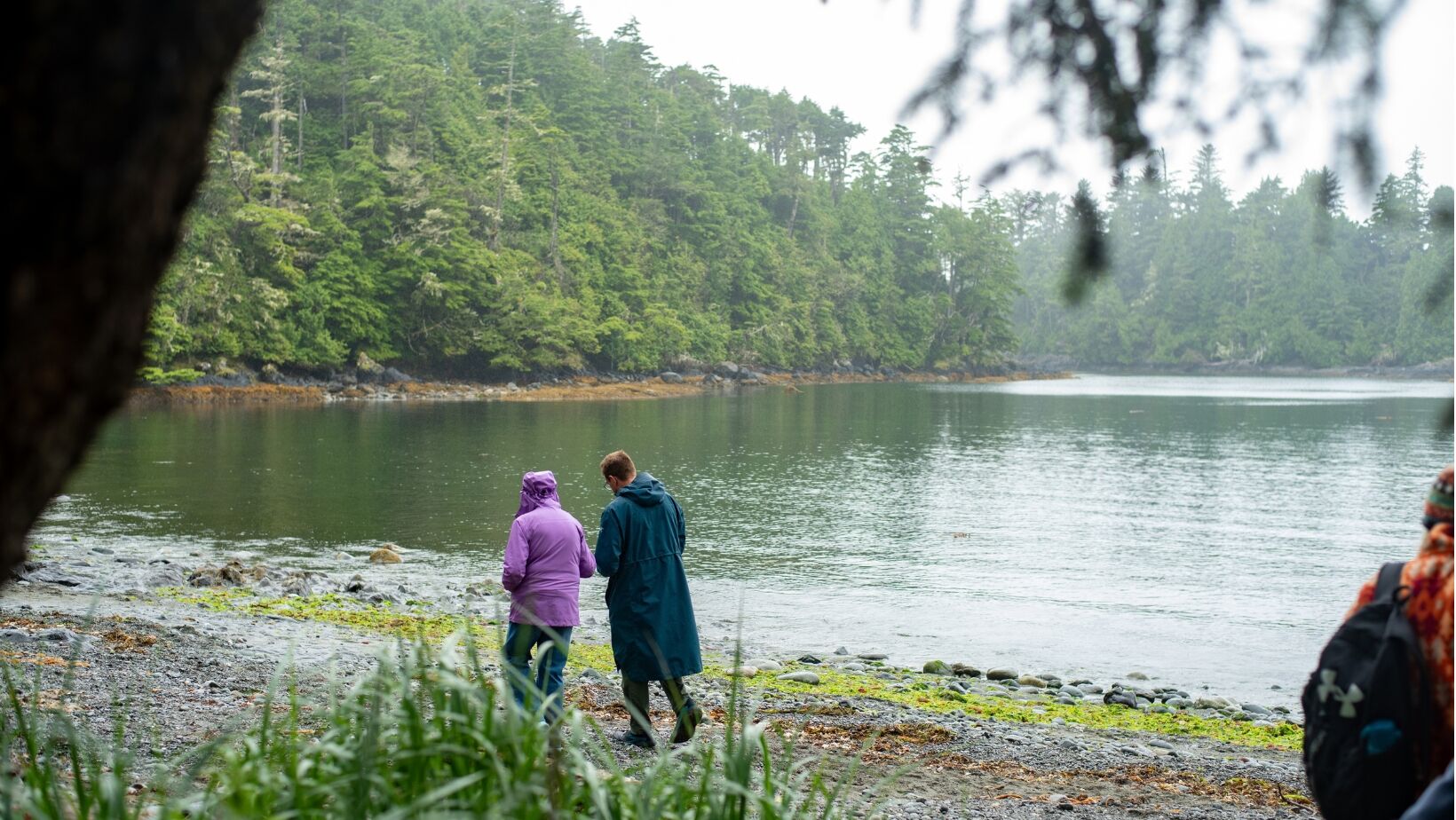 Photo Credit: Nina Moodley
Published 10/11/2026