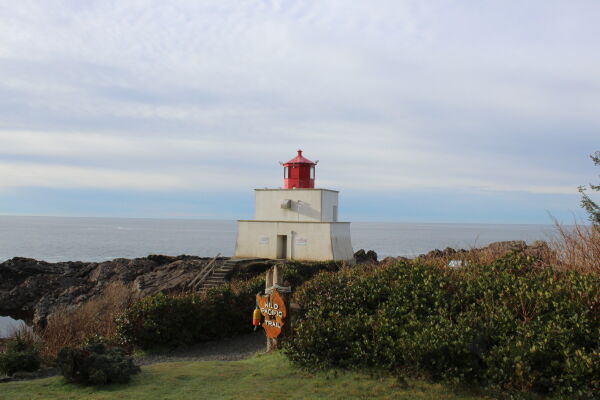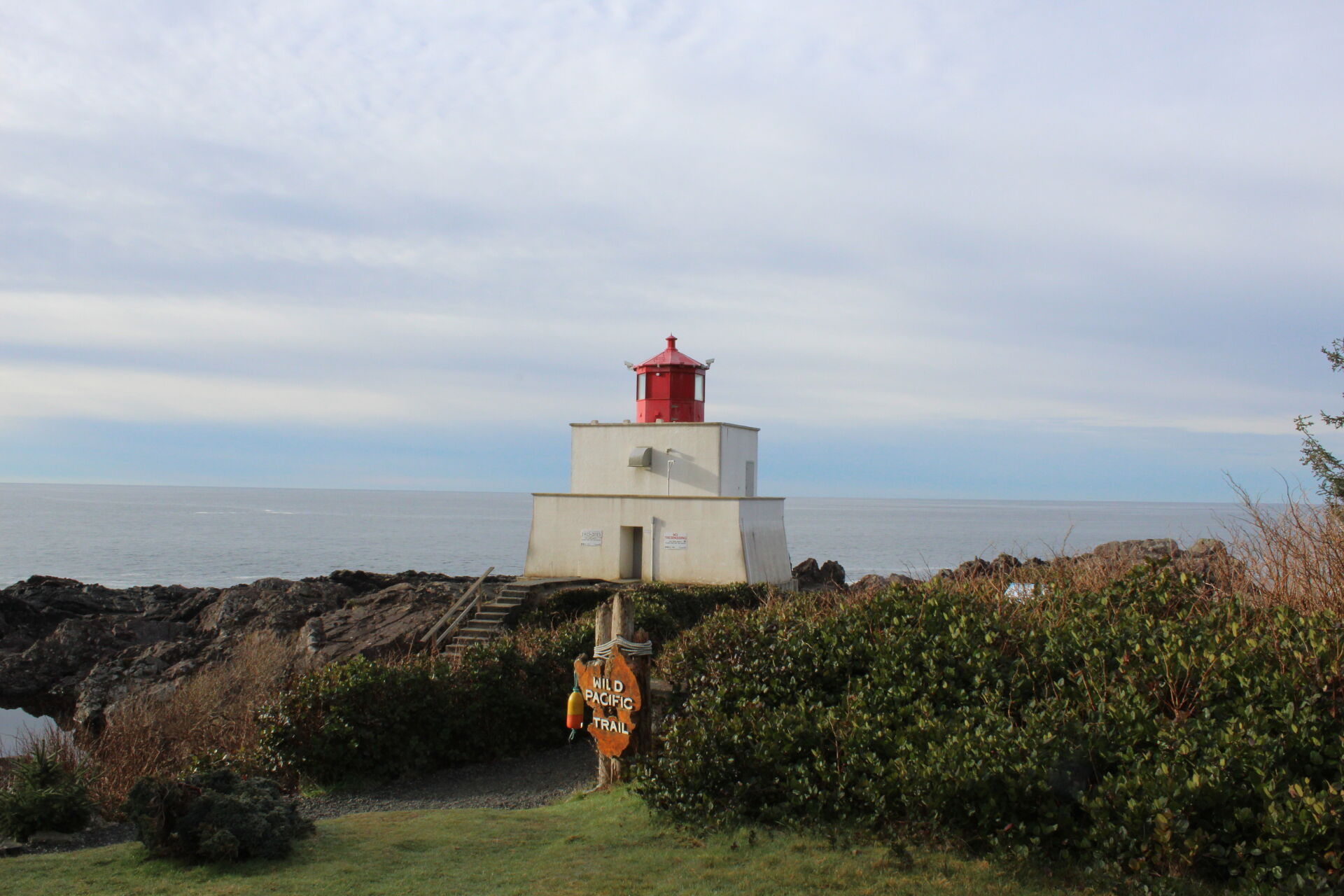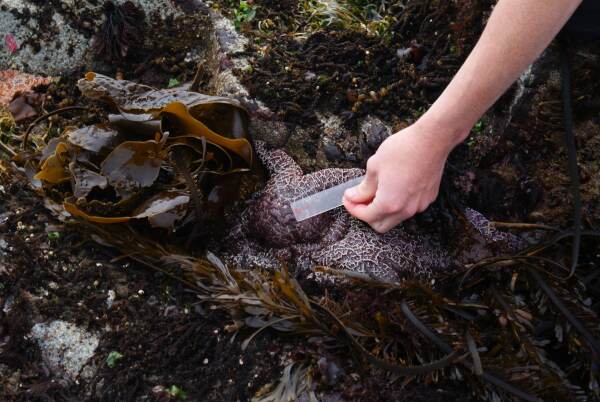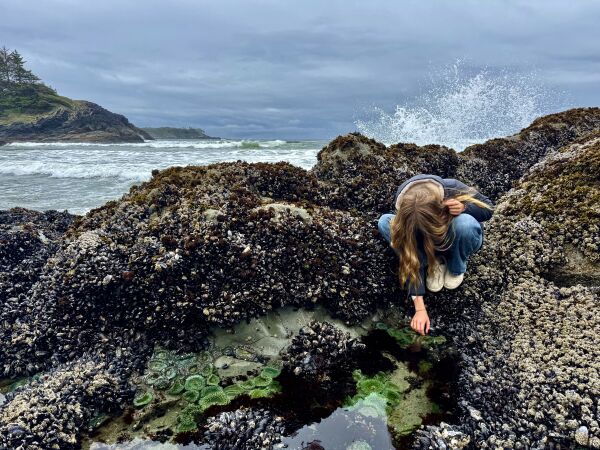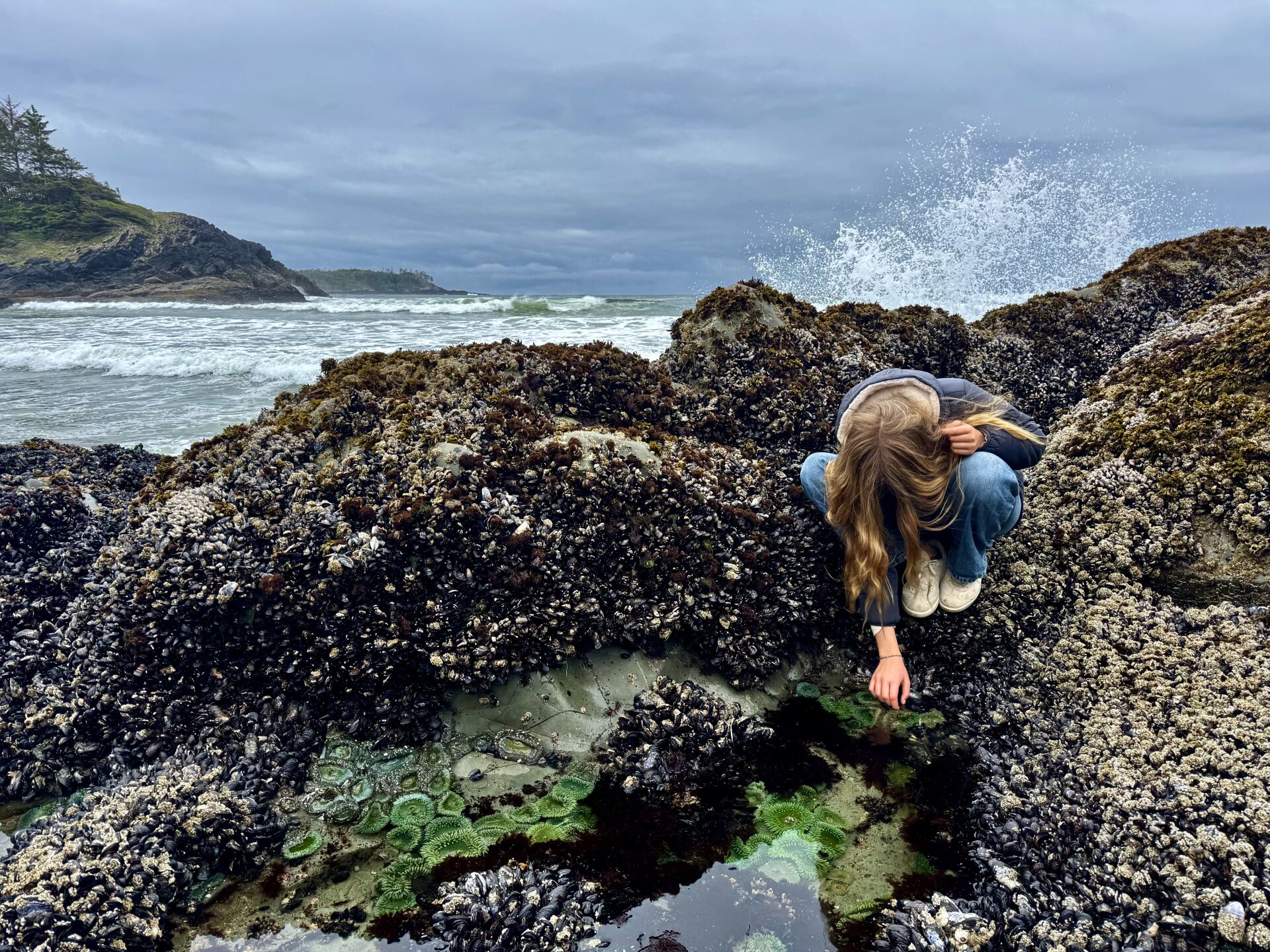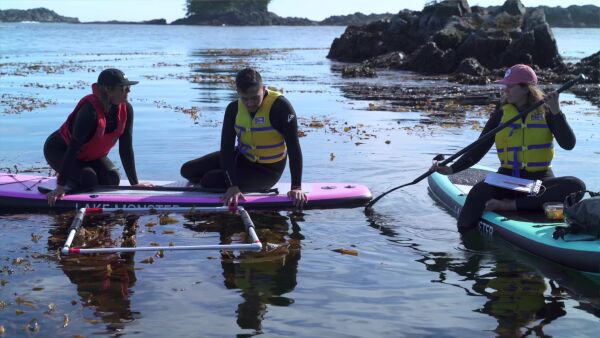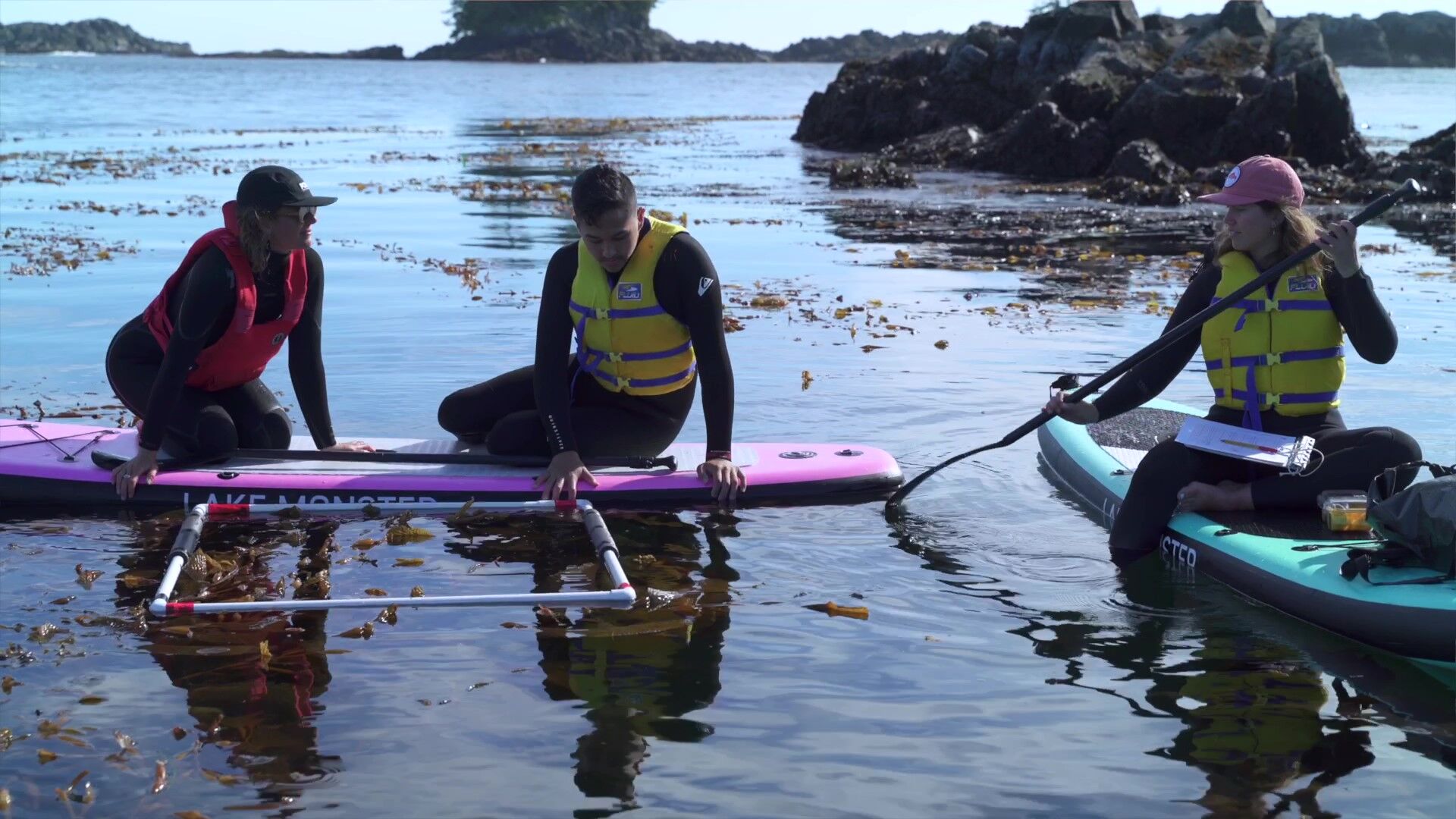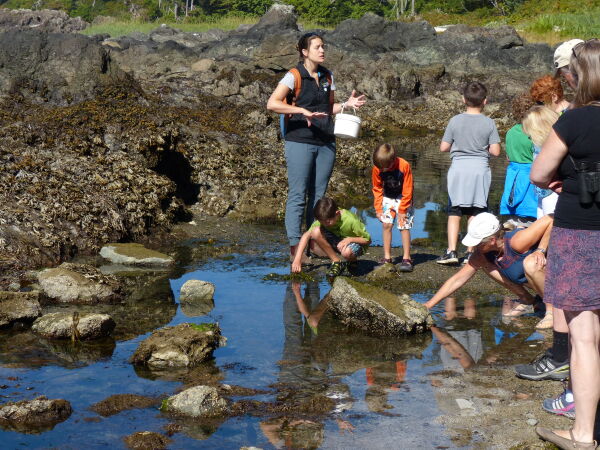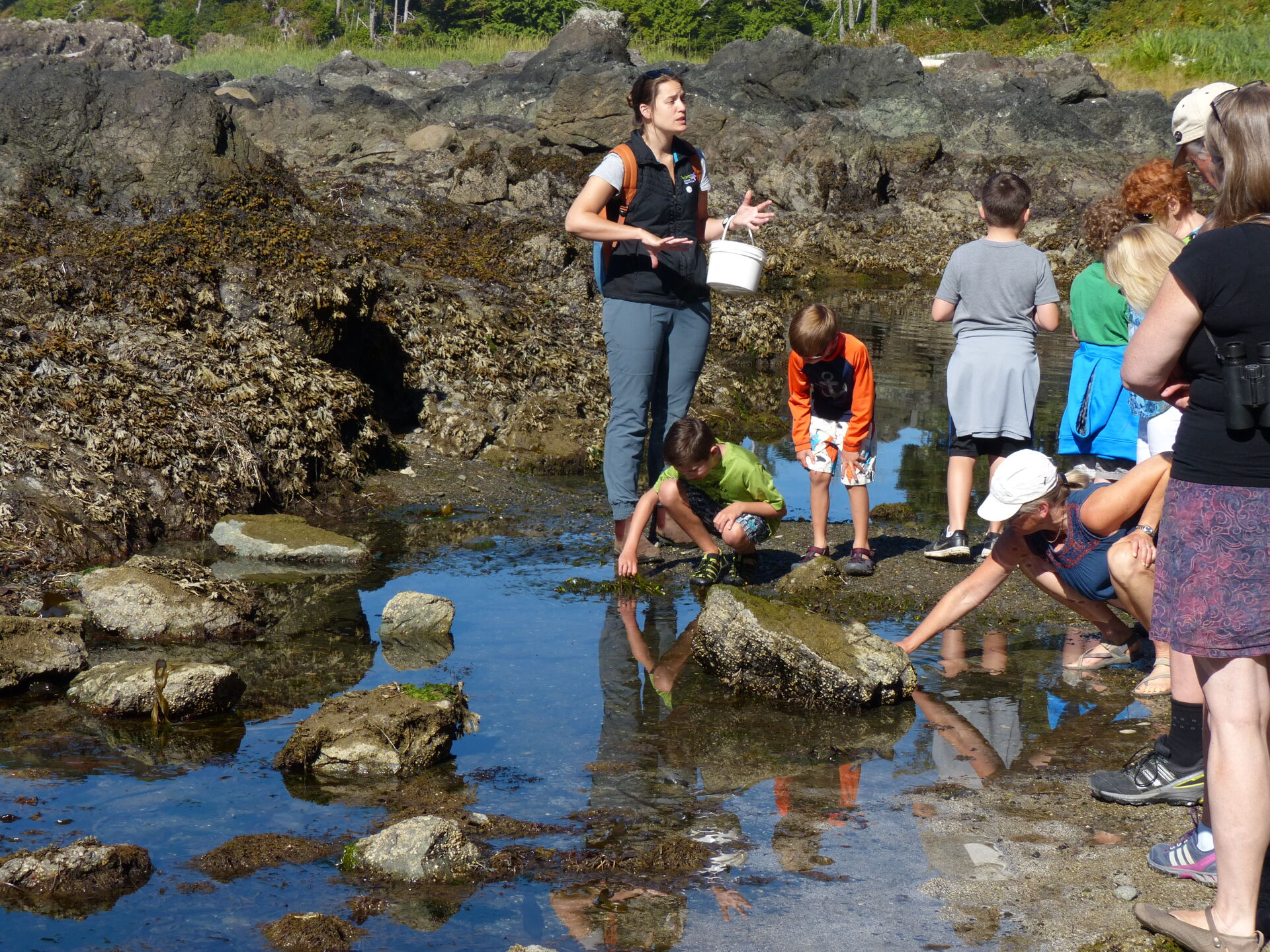
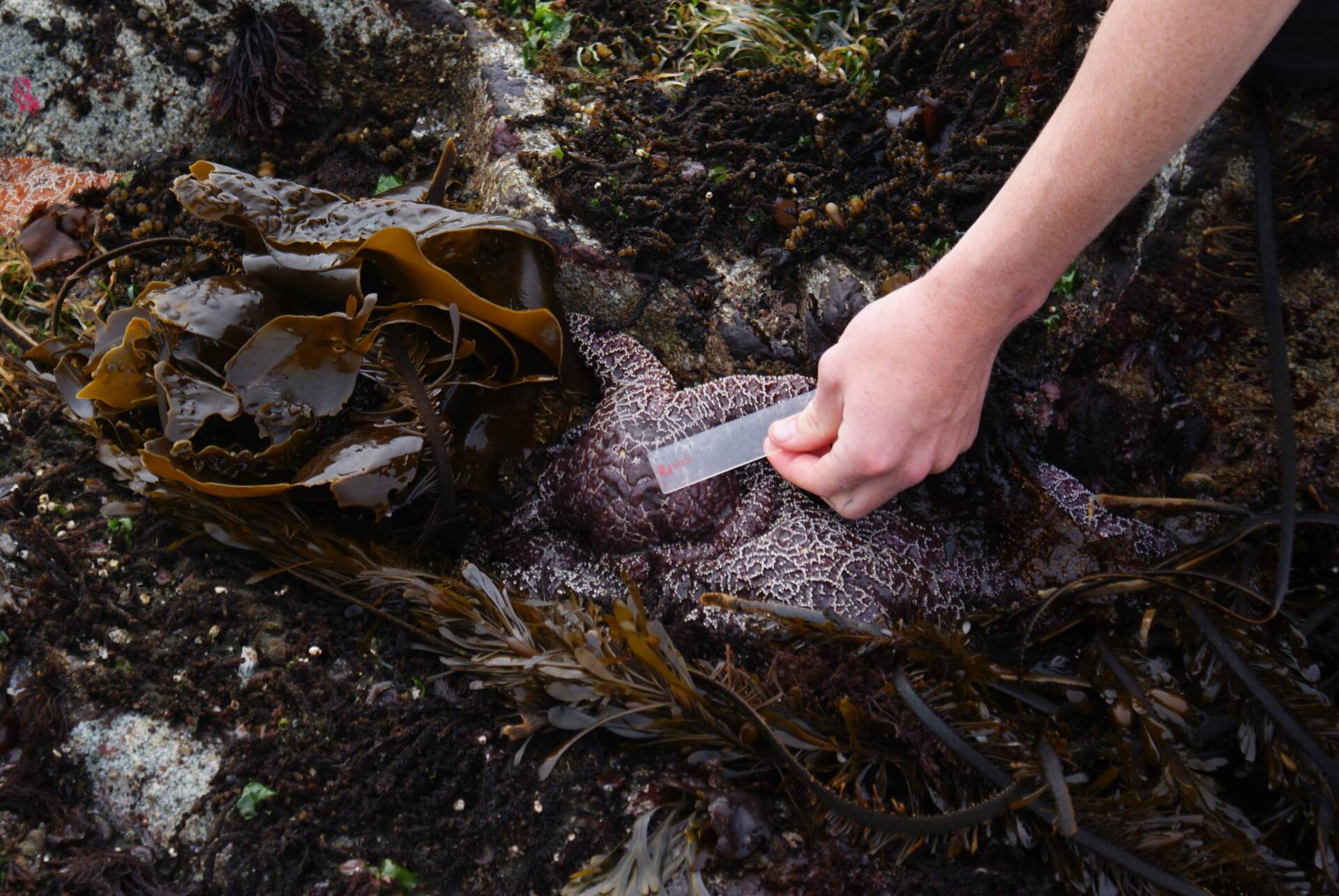
Join Redd Fish Restoration Society for their sea star wasting survey at Tonquin beach!
Just like salmon, qasqiip (sea stars) are a foundational species, which means they help define their ecosystem. Sunflower stars are a critical species and fill a similar ecological niche as sea otters. The loss of sunflower stars can lead to the population explosion of one of their favourite prey items: sea urchins.
Overpopulated urchins can quickly devour kelp, which provides essential habitat for juvenile salmon during their transition phase into marine water (as well other functions including sequestering CO2 for us).
Unfortunately, since 2013, sea stars have been experiencing a devastating mass mortality event that has decimated populations in deepwater habitats to intertidal zones along the shores of western North America.
The culprit: Sea Star Wasting Syndrome (SSWS).
The species hardest hit by SSWS is the captivating sunflower sea star (Pycnopodia helianthoides). This once-abundant apex predator is currently missing from most of its previously extensive range, from Mexico to Alaska, with populations having plummeted over 90%. Researchers estimate that as many as 5.75 billion animals have perished in this most recent bought of SSWS. As of Dec 2020, the sunflower sea star is listed as critically endangered by the International Union for Conservation of Nature (IUCN).
With the help of citizen-science volunteers, this is the 12th year of sea star wasting data gathered on the west coast, contributing to the North-America wide monitoring program by MARINe.
No experience necessary! Meet at the Tonquin Beach parking lot and dress for the weather. No registration required.